Why Vancouver’s New Laneway Houses Are Creating Hidden Property Maintenance Conflicts (And How Pressure Washing Your Narrow Spaces Prevents Costly Disputes with Primary Homeowners)
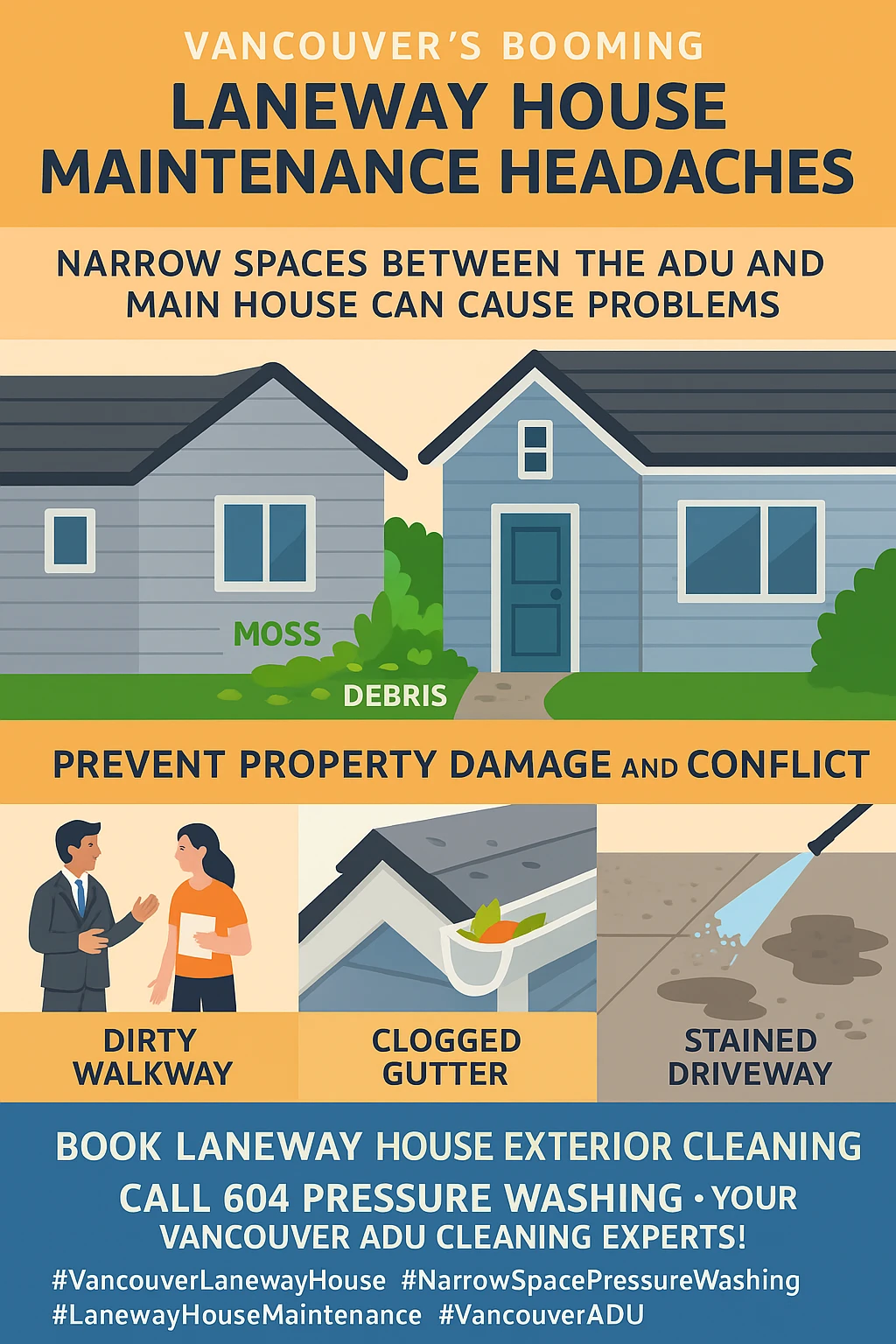
Struggling to figure out who’s responsible for maintaining those grimy shared spaces around your Vancouver laneway house? You’re not alone – Vancouver’s laneway housing boom has created a maintenance crisis that’s pitting primary homeowners against laneway residents in costly disputes over who cleans what and when.Vancouver’s laneway housing revolution has transformed neighborhoods across the city, with over 6,000 laneway homes either built or under construction as of 2024. What started as an innovative solution to housing affordability has evolved into something much more complex – a web of maintenance responsibilities that nobody saw coming. While city planners celebrated the success of adding density without destroying neighborhood character, they overlooked a critical detail: who exactly is supposed to maintain all those narrow shared spaces, grimy driveways, and moss-covered access points that connect primary homes to their laneway counterparts?The reality is messier than anyone anticipated. Sarah Chen, who rents a laneway home in East Vancouver, discovered this firsthand when her primary homeowner landlord demanded she pressure wash the shared driveway – a space she barely uses but walks past daily. Meanwhile, across town in Kitsilano, primary homeowner David Rodriguez found himself footing the entire bill for cleaning moss-covered stairs and walkways that his laneway tenants use exclusively. These aren’t isolated incidents – they’re symptoms of a larger problem that’s creating tension, confusion, and surprisingly expensive legal battles throughout Vancouver’s densifying neighborhoods.What makes this situation particularly frustrating is that Vancouver’s zoning bylaws never anticipated these maintenance gray areas. The city’s regulations specify technical requirements for building laneway homes but remain surprisingly vague about who maintains the spaces between them. This regulatory gap has left thousands of property owners, landlords, and tenants navigating uncharted territory where a simple question – “who cleans the shared laneway?” – can escalate into disputes costing thousands of dollars in mediation fees.
Key Outtakes:
- Vancouver’s laneway housing boom has created maintenance ambiguity between primary homeowners and laneway residents, with shared exterior spaces often becoming dispute hotspots
- Pressure washing and regular exterior maintenance serve as both practical solutions and legal documentation that can prevent costly neighbor conflicts and property disputes
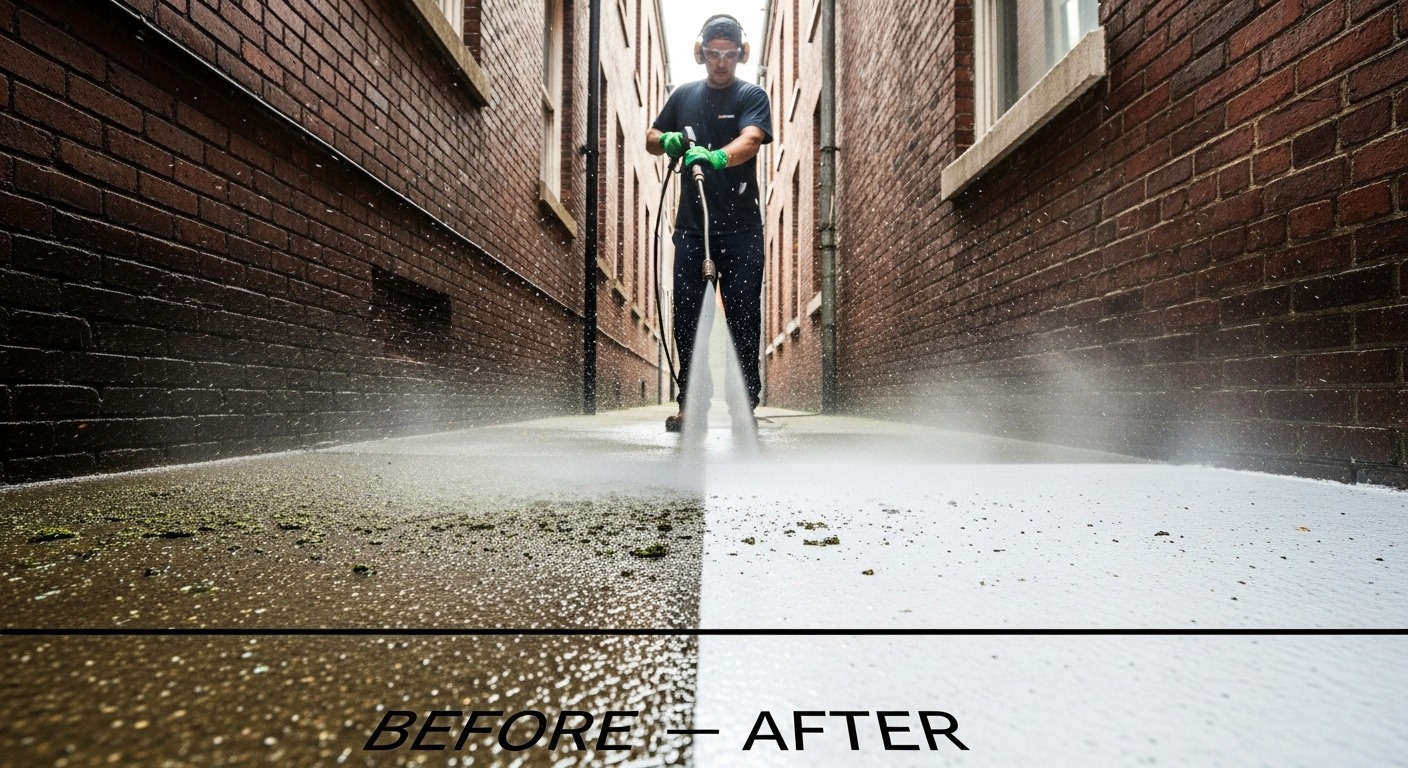
- Narrow laneway spaces present unique pressure washing challenges that require specialized techniques to avoid damage while maintaining shared access points
- Formal maintenance agreements and clear responsibility assignments are critical for preventing escalation from minor maintenance issues to legal disputes
- Preventive maintenance in laneway properties reduces long-term costs by up to 70% and protects property values for both primary homes and secondary dwelling units
The Laneway Housing Boom and the Emerging Maintenance Crisis
The scale of Vancouver’s laneway housing transformation cannot be overstated. Since the program’s approval in 2009, these secondary dwelling units have become what Council member Mike Klassen calls part of the neighborhood fabric – “You don’t hear people complaining about laneway homes. They’ve just become a part of our neighbourhoods.” This success story represents one of Vancouver’s most effective housing policy initiatives, providing solutions for aging in place, intergenerational housing, and attainable homeownership while maintaining the character of single-family neighborhoods.However, success in housing policy has revealed an unexpected infrastructure gap. Vancouver’s secondary suite regulations specify technical requirements for individual laneway homes but remain frustratingly vague on shared exterior space maintenance responsibilities. The city’s zoning approach treats each property as a single maintenance unit, despite the reality that many properties now contain multiple dwelling units with separate access points, shared driveways, and overlapping outdoor spaces that require regular upkeep.The demographic reality adds another layer of complexity to this maintenance puzzle. Approximately 42% of single-family homes in Vancouver are owned mortgage-free by individuals 65 and older, creating scenarios where aging primary homeowners may lack the physical capacity or financial flexibility for intensive maintenance work. Meanwhile, younger family members or tenants occupying laneway homes often assume they’ll handle maintenance, only to discover that legal responsibility remains murky. This generational and ownership mismatch creates fertile ground for misunderstandings that can quickly escalate into serious disputes.What’s particularly problematic is that Vancouver’s Standards of Maintenance By-law 5462 requires building exteriors to be “free from holes, breaks, and loose or rotting materials” but doesn’t specify how this applies when multiple parties share access to the same spaces. When a shared driveway develops oil stains or moss begins growing on steps used by both primary and laneway residents, which party bears responsibility for pressure washing and maintenance? The regulatory silence on this question has created a maintenance crisis hiding in plain sight throughout Vancouver’s densifying neighborhoods.The permit and development approval process hasn’t evolved to address these practical realities either. While the city has streamlined laneway home approvals and celebrated their contribution to housing supply, the administrative framework still treats maintenance as a single-property responsibility. This disconnect between housing policy success and maintenance policy clarity has left thousands of property owners navigating uncharted territory without clear guidelines or dispute resolution mechanisms.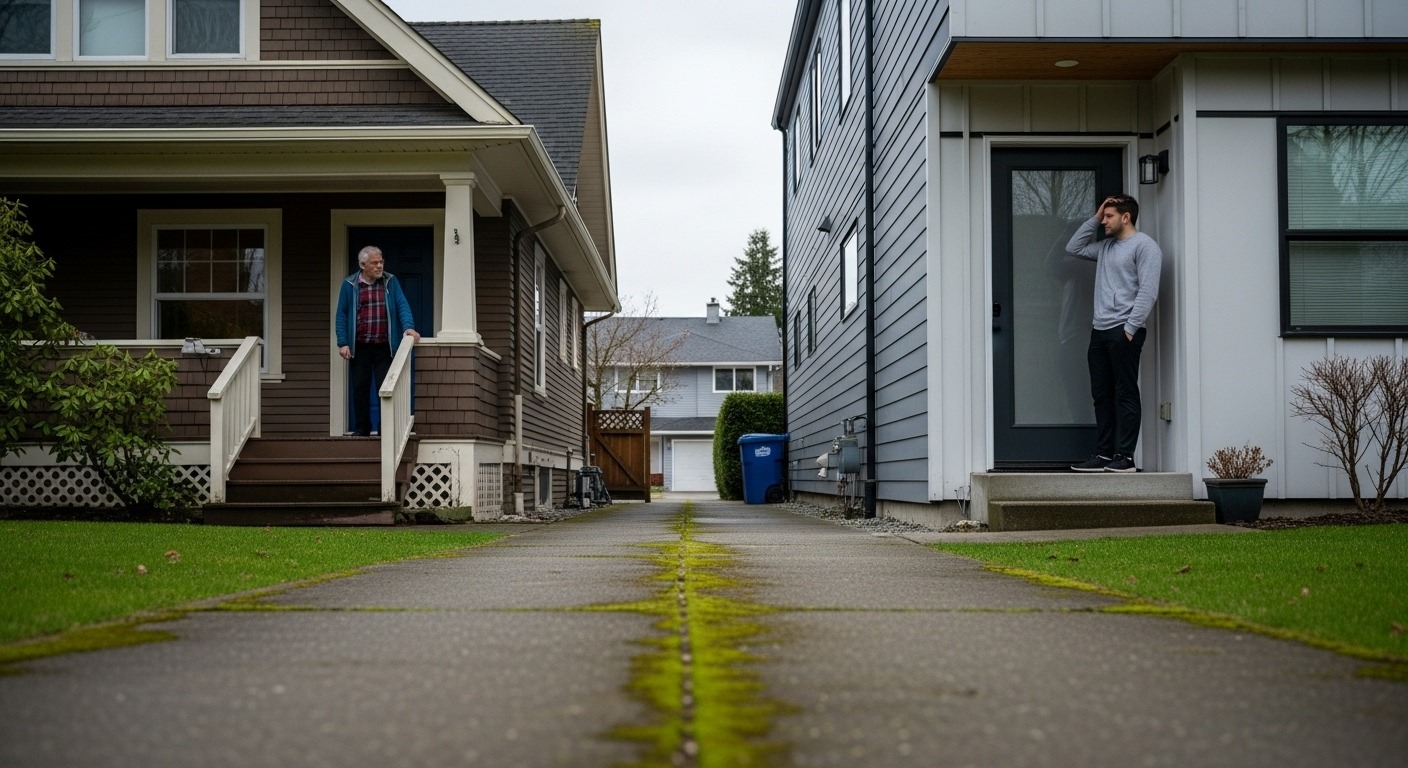
Understanding Maintenance Responsibilities Between Primary Homes and Laneway Homes
The legal landscape surrounding shared space maintenance in Vancouver’s laneway housing is surprisingly complex, particularly because these properties cannot be strata titled under current regulations. This means that even when a laneway home functions as a completely separate dwelling with its own address and utilities, it remains legally tied to the primary dwelling for maintenance and ownership purposes. The inability to create separate legal ownership creates a fundamental ambiguity about who bears responsibility when shared spaces require cleaning, repair, or upkeep.Under British Columbia’s Residential Tenancy Act, landlords must ensure rental properties comply with health and safety standards, including exterior maintenance that affects habitability. However, this framework assumes a clear landlord-tenant relationship, which becomes complicated in laneway housing where ownership structures may involve family arrangements, co-ownership, or informal agreements. When a laneway home is occupied by family members rather than traditional tenants, or when the laneway resident has contributed financially to property improvements, the neat categories of landlord and tenant responsibility begin to break down.The financial implications of unclear responsibility allocation can be substantial. Infrastructure upgrades to sewer and water supply in shared laneways can cost between $20,000-$50,000, with disputes over who pays often leading to delayed maintenance that compounds problems. When moss growth damages shared roofing or poor drainage creates foundation issues affecting both properties, the question of cost-sharing becomes critical. Legal disputes over laneway maintenance responsibilities commonly cost $5,000-$25,000 in mediation and legal fees – expenses that often exceed the cost of regular preventive maintenance by a factor of ten or more.Perhaps most importantly, the absence of clear responsibility allocation creates a psychological burden that affects daily life for both primary homeowners and laneway residents. When shared spaces show visible signs of neglect – dirty driveways, moss-covered steps, grimy exterior walls – both parties may feel frustrated that the other isn’t taking action. This frustration compounds over time, transforming minor maintenance issues into relationship conflicts that can poison the entire living arrangement. Properties with documented maintenance agreements that specify responsibility allocation experience significantly fewer disputes, suggesting that clarity of expectation is as important as the maintenance work itself.BC’s tenancy laws do provide some guidance on dividing maintenance responsibilities between interior and exterior spaces, but these distinctions become blurred in laneway arrangements where private and shared spaces overlap in complex ways. A concrete driveway used by both properties, steps leading to the laneway home that cross the primary property, or shared utility access points all represent gray areas where legal responsibility isn’t clearly defined. This regulatory ambiguity means that many maintenance decisions end up being made informally, creating potential for future disputes when relationships change or properties are sold.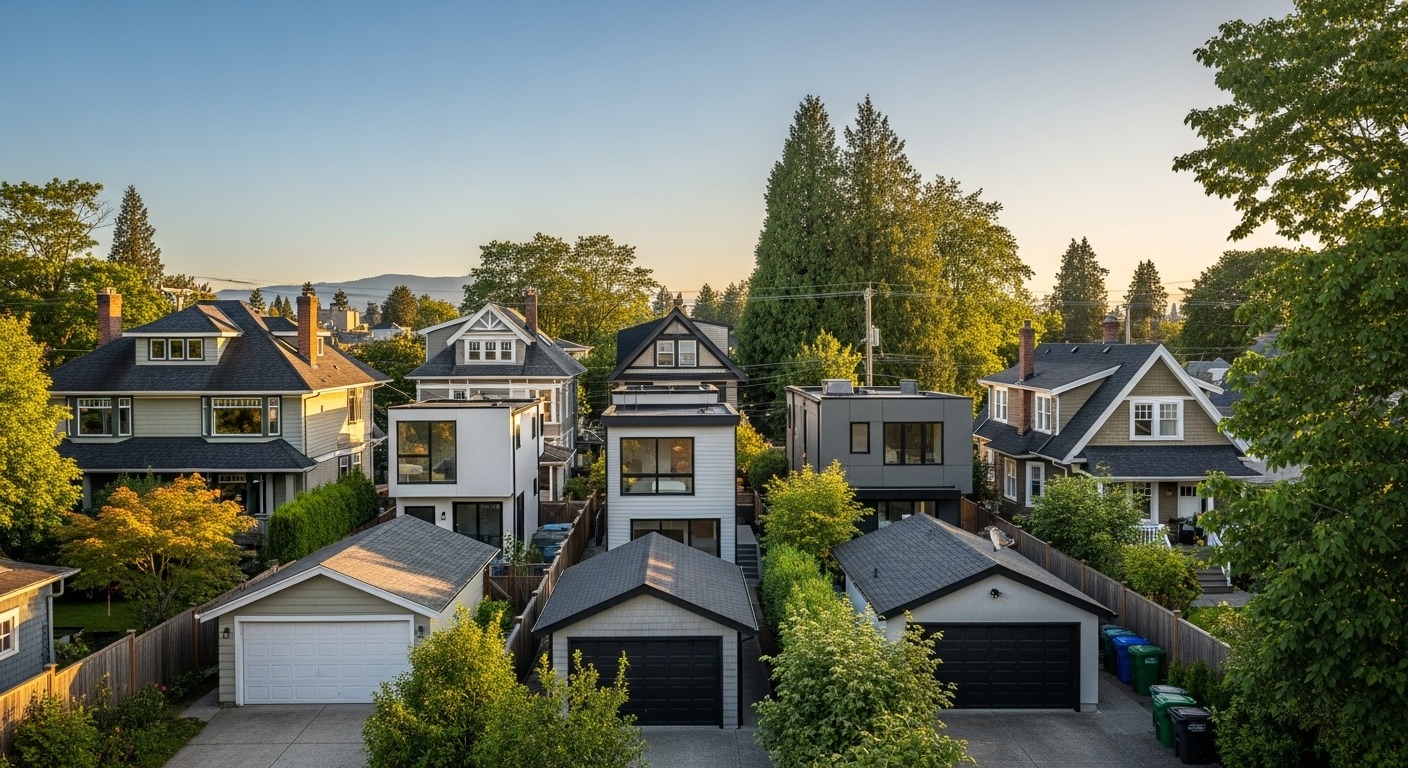
How Pressure Washing and Exterior Maintenance Prevent Disputes
Regular pressure washing represents far more than simple cosmetic maintenance – it functions as a comprehensive dispute prevention strategy that protects both property values and interpersonal relationships. When exterior surfaces are consistently maintained through professional cleaning, both primary homeowners and laneway residents can point to visible evidence that shared spaces are being properly cared for. This visible maintenance creates a psychological foundation of shared responsibility that can prevent minor issues from escalating into major conflicts.The connection between exterior maintenance and property value protection is particularly significant in Vancouver’s expensive real estate market. A clean, well-maintained exterior can increase property value by 5-10%, while visible neglect can reduce property values by 10-15%. For a typical Vancouver property valued between $1.2-1.5 million, this represents a potential swing of $120,000-$225,000 in equity. Regular pressure washing, costing approximately $300-$1,500 annually, represents a