
Discovering mysterious efficiency drops in your Vancouver heat pump just years after installation? The culprit is likely contaminated coils from our coastal climate, and the solution isn’t what most homeowners think it is.
Vancouver homeowners are experiencing a frustrating phenomenon with their new heat pump installations: systems that should deliver exceptional energy efficiency are mysteriously losing performance within just a few years of operation, leading to energy bills that are 15 to 25 percent higher than expected. The primary cause isn’t faulty equipment or poor installation but rather the rapid accumulation of environmental contaminants on critical system components, particularly the outdoor condenser coils and indoor evaporator coils. This contamination problem is significantly accelerated by Vancouver’s unique coastal environment, where high humidity, salt spray from the Pacific Ocean, and frequent moisture create perfect conditions for biological growth and debris accumulation on HVAC equipment.
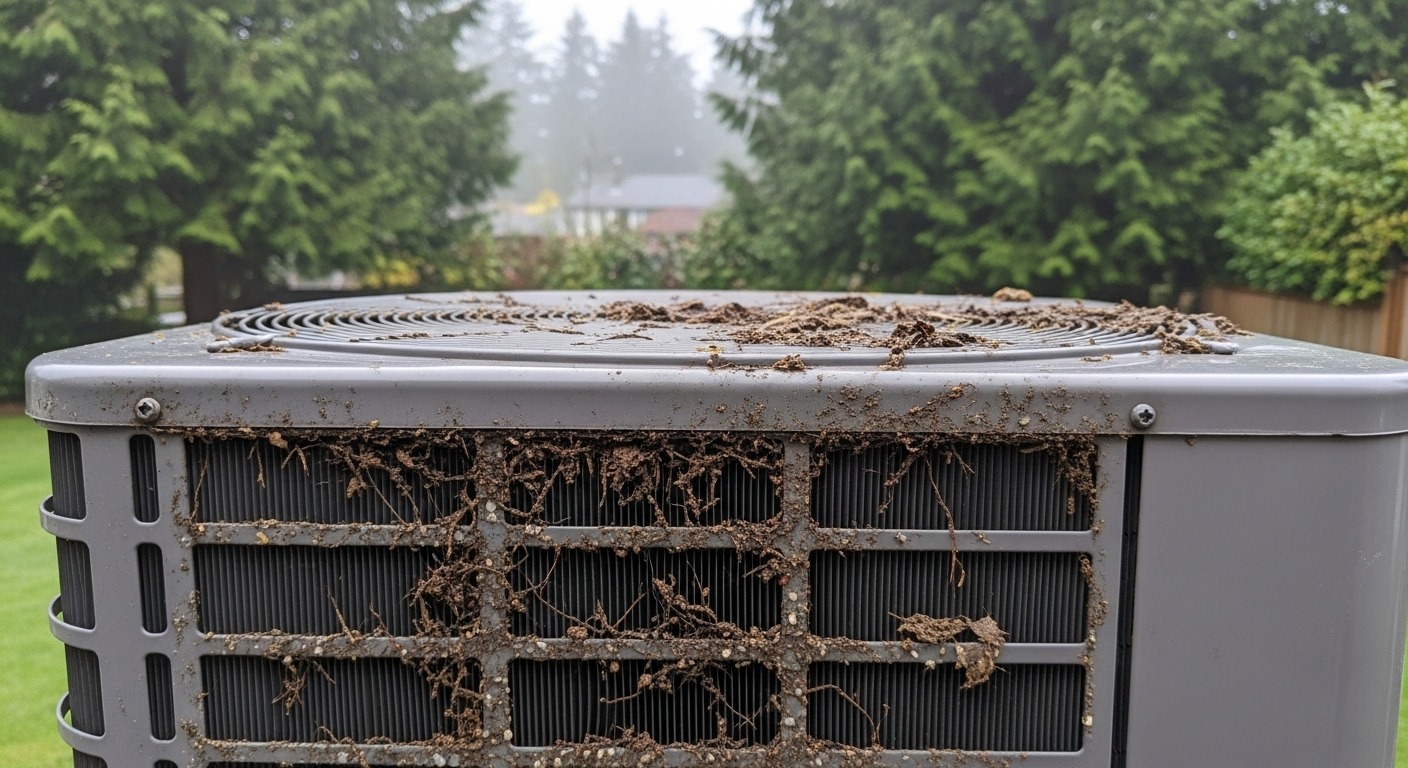
The temptation for many homeowners is to grab a pressure washer and blast away the visible dirt and debris from their outdoor heat pump unit. However, this approach can cause thousands of dollars in immediate damage to delicate aluminum fins and copper coils that are engineered for maximum heat transfer efficiency. Understanding the proper cleaning methods and maintenance strategies is essential for Vancouver homeowners who want to protect their heat pump investment and maintain optimal energy efficiency throughout the system’s 15 to 20-year lifespan.
Professional heat pump maintenance and specialized coil cleaning represent the most effective solutions for restoring system efficiency and preventing the cascade of problems that lead to expensive repairs or premature system replacement. By implementing proper maintenance protocols and understanding the unique challenges posed by Vancouver’s coastal climate, homeowners can ensure their heat pump systems deliver the promised energy savings and reliable comfort they were designed to provide.
Key Takeaways
- Dirty heat pump coils can reduce system efficiency by 40-60 percent, directly increasing energy bills by 15-25 percent annually
- Vancouver’s coastal environment with salt air and high humidity accelerates contamination of HVAC equipment far faster than inland regions
- Power washing should never be used on heat pump outdoor units as it causes $2,000+ in damage; only gentle pressure cleaning with specialized coil cleaners is appropriate
- Professional heat pump maintenance costing $200-500 annually prevents compressor failure repairs exceeding $2,000-4,000
- Homeowners implementing preventative strategies like regular filter changes and maintaining clear space around units can extend system life to the full 15-20 year design lifespan
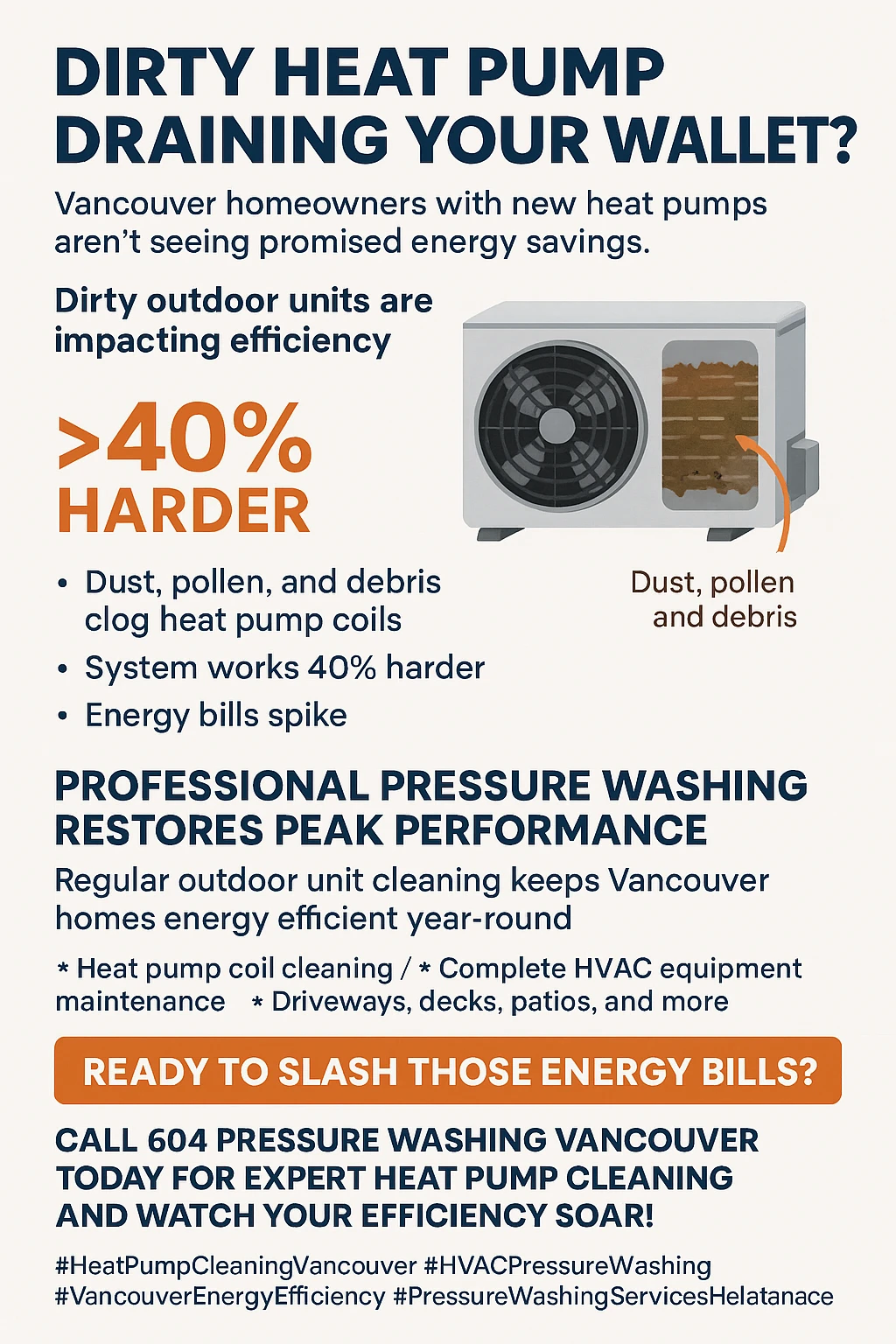
Why Vancouver Heat Pumps Lose Efficiency Faster Than Other Regions
The Pacific Northwest’s coastal climate creates a perfect storm of environmental factors that accelerate heat pump contamination at rates far exceeding what homeowners in drier, inland climates experience. Vancouver’s geographic position exposes HVAC equipment to a unique combination of challenges that begin degrading system performance almost immediately after installation. The region’s mild winters, where temperatures typically range between 0°C and 10°C, combined with humidity levels that frequently exceed 70 percent during fall and spring months, create ideal conditions for both biological and chemical contamination of delicate heat pump components.
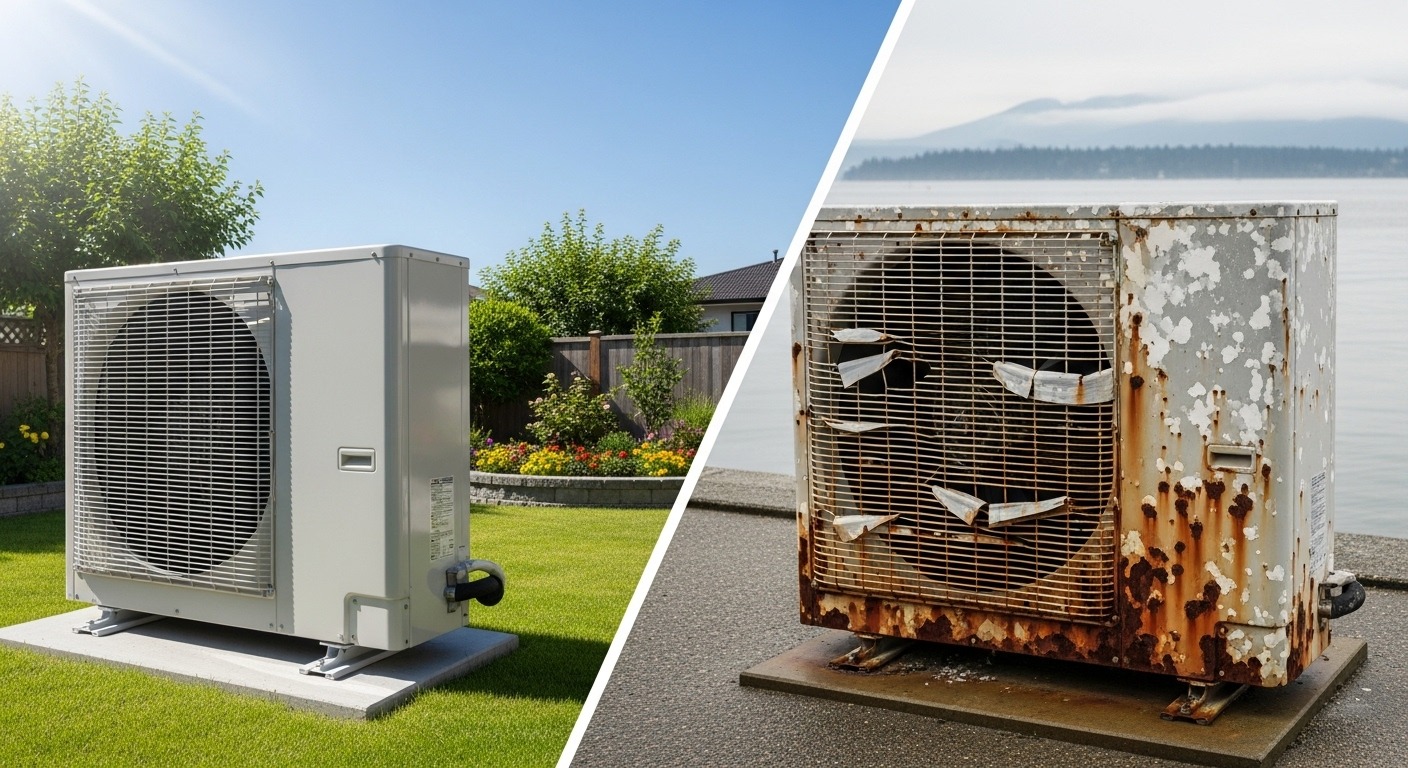
Salt spray from proximity to the Pacific Ocean represents one of the most destructive environmental factors affecting Vancouver-area heat pump installations. This invisible airborne salt deposits on outdoor condenser coils, where it combines with moisture to create highly corrosive conditions that attack aluminum fins and copper refrigerant lines. The corrosive effects extend beyond simple surface degradation, penetrating electrical connections and capacitors that are essential for system operation. Homeowners in coastal communities like Richmond, White Rock, and West Vancouver report that their heat pump systems show visible signs of corrosion within 18 to 24 months of installation, far sooner than the five to seven years typical in non-coastal environments.
Beyond salt corrosion, Vancouver’s position at the mouth of the Fraser Valley exposes HVAC equipment to agricultural dust, pollen, and seasonal debris that accumulates rapidly on outdoor units. The region’s lush vegetation and frequent rainfall create conditions where organic matter becomes compressed into dense layers on condenser coils, restricting airflow and creating breeding grounds for mold and mildew. Research from Southern California Edison demonstrates that dirty condenser coils can degrade cooling capacity by as much as 40 percent, increase compressor power demand by up to 70 percent, and reduce overall energy efficiency by 60 percent. When applied to Vancouver’s year-round heat pump operation, these efficiency losses translate directly into monthly energy bills that are hundreds of dollars higher than they should be.
The compressor, which serves as the heart of the heat pump system, becomes the ultimate victim of this environmental assault. When outdoor coils become contaminated, the system must operate at elevated pressures and temperatures to achieve the same heat transfer rate as a clean system. This chronic overloading accelerates wear on internal components, including compressor motor bearings and valve assemblies that control refrigerant flow. According to the U.S. Department of Energy, dirty coils can increase compressor energy consumption by 30 percent, creating a cascade of problems that ultimately lead to premature component failure and the need for expensive emergency repairs.
Indoor evaporator coils face their own contamination challenges in Vancouver’s humid environment, where mold and mildew growth occurs rapidly on cooling coils that naturally produce condensation during operation. When combined with dust, pollen, and pet dander that bypass inadequately maintained air filters, these indoor coils become breeding grounds for biological contaminants that not only reduce heat transfer efficiency but also degrade indoor air quality throughout the home. The interaction between HVAC cleanliness and indoor air quality becomes particularly critical in Vancouver’s naturally humid environment, where untreated contamination can contribute to respiratory issues and allergy symptoms in household occupants.
The Pressure Washing Misconception and Why It Damages Equipment
One of the most dangerous misconceptions among Vancouver homeowners is the belief that pressure washing represents an appropriate method for cleaning outdoor heat pump condensers. This assumption, while understandable given the visible accumulation of dirt and debris on outdoor units, can result in thousands of dollars in immediate equipment damage and void manufacturer warranties. The critical issue lies in understanding the dramatic difference between the water pressure levels that different cleaning equipment produces and the pressure tolerance of delicate HVAC components.
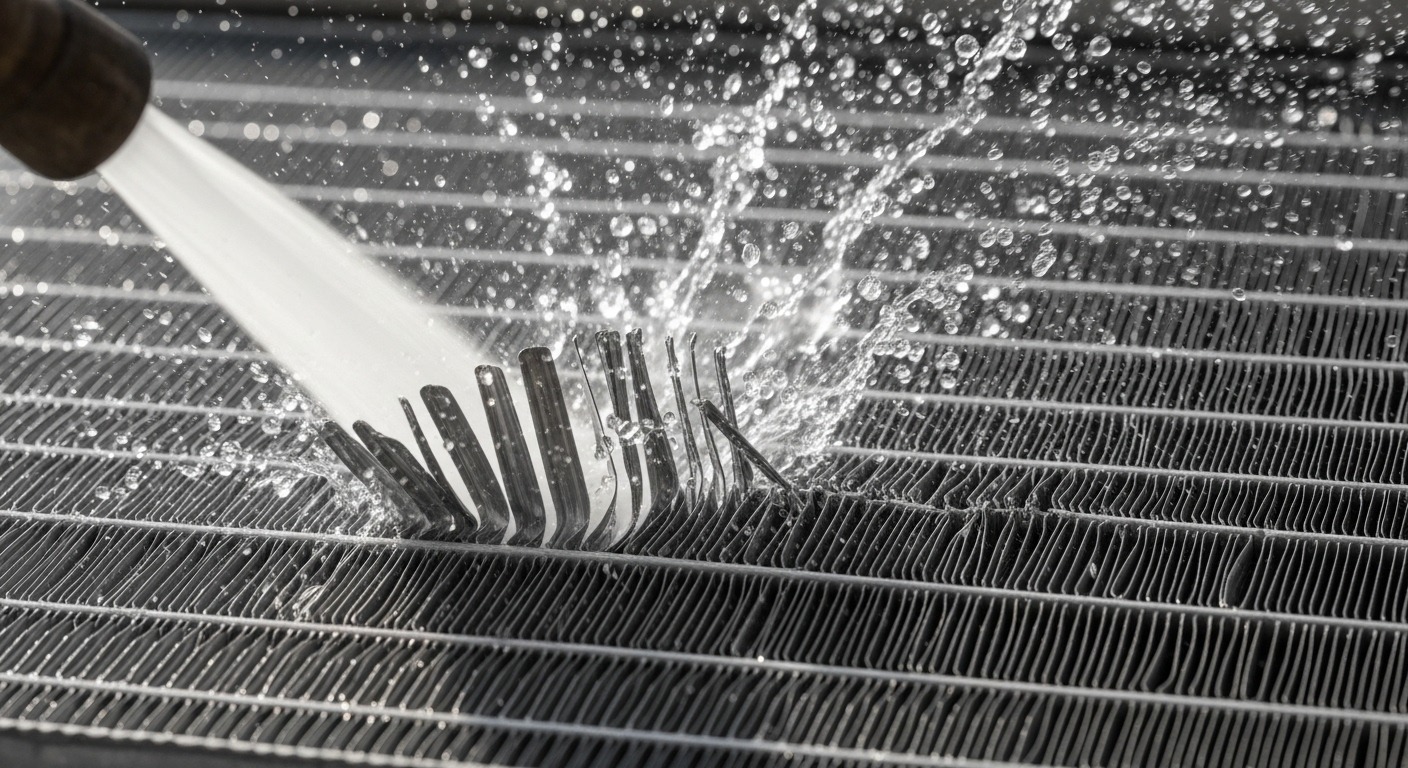
A standard garden hose connected to municipal water supply produces water pressure between 40 and 60 pounds per square inch (PSI), which represents the maximum safe pressure level for cleaning heat pump coils without causing damage. In contrast, consumer-grade pressure washers typically generate water pressure between 1,300 and 4,000 PSI, creating pressure levels that are 20 to 100 times greater than what aluminum fins and copper coils can withstand. Professional-grade commercial pressure washing equipment can exceed 4,000 PSI, delivering water streams powerful enough to cut through wood and strip paint from surfaces.
The aluminum and copper fins that comprise the external structure of heat pump condenser coils are specifically engineered to be thin and delicate in order to maximize the surface area available for heat transfer between refrigerant and outdoor air. These fins, typically measuring just a few thousandths of an inch in thickness, are designed to facilitate optimal airflow patterns across the coil surface. When exposed to high-pressure water streams, these delicate fins bend, warp, and perforate almost instantly, compromising the aerodynamic characteristics that enable efficient heat exchange and significantly reducing overall system performance.
Beyond the obvious damage to coil fins, high-pressure water creates additional risks that can render the entire system non-operational. Pressurized water can force its way past seals and gaskets designed to protect electrical components, introducing moisture into capacitors, contactors, and control board assemblies that can cause immediate electrical failure or create long-term corrosion problems. In worst-case scenarios, high-pressure water can create microscopic holes in refrigerant lines or damage the brazed connections where refrigerant tubes connect to the coil assembly, resulting in refrigerant leaks that require expensive professional repairs to locate and correct.
The proper approach to cleaning outdoor heat pump condenser units begins with completely disconnecting electrical power to both indoor and outdoor components, ensuring that fan motors cannot operate during the cleaning process and eliminating any risk of electrical shock. Once power is safely disconnected, visible debris including leaves, grass clippings, and other organic matter should be carefully removed by hand or using gentle suction with a shop vacuum. Professional cleaning techniques emphasize the importance of using specialized non-corrosive coil cleaning products specifically formulated for HVAC equipment, which contain surfactant agents that break down
