
Wondering why your Tesla’s charging port suddenly developed copper-colored corrosion after your weekend driveway cleaning session? The culprit might be lurking in your garage right next to that shiny pressure washer you just used to blast away the winter grime.
Picture this: you’ve just dropped a cool hundred grand on a gorgeous new Tesla Model S, complete with that sleek home charging setup in your Vancouver driveway. The Pacific Northwest rain has been doing its thing all winter, leaving your concrete looking more like a science experiment than a place to park your electric dream machine. So naturally, you fire up the pressure washer for some serious spring cleaning action. But here’s the plot twist nobody warned you about – that high-pressure spray you just unleashed might have just voided your charger warranty and damaged your six-figure investment in ways that won’t show up for months.
Vancouver’s unique climate creates a perfect storm for EV charging equipment damage. Between our notorious wet winters, salt-laden coastal air, and the constant cycle of rain-dry-rain-again, our charging stations face challenges that most manufacturers never anticipated during their testing phases. When you add pressure washing into this equation, you’re essentially fast-forwarding years of environmental damage into a single afternoon. The water that seems to just bounce off your driveway is actually finding its way into connector pins, circuit boards, and other sensitive components that cost thousands to replace and aren’t covered under warranty when the damage stems from “improper use.”
Key Outtakes:
- Pressure washing near EV charging equipment can force water past protective seals, causing corrosion and electrical damage that voids manufacturer warranties
- Vancouver’s coastal climate and frequent precipitation amplify risks to charging infrastructure, making protective maintenance practices more critical than in drier regions
- EV charger warranties explicitly exclude damage from improper cleaning methods, potentially leaving owners with $4,000+ repair bills for pressure washing incidents
- Safe driveway maintenance around charging equipment requires specific protocols including equipment shutdown, physical barriers, and alternative cleaning methods
- Professional maintenance documentation and approved cleaning techniques are essential for preserving warranty coverage on expensive charging infrastructure
The Hidden Dangers of High-Pressure Water Around EV Charging Equipment
Let’s talk about what’s actually happening when you point that pressure washer anywhere near your charging station. Most residential pressure washers operate between 1,500 and 3,000 PSI – that’s enough force to strip paint, remove decades of grime, and unfortunately, penetrate the protective seals that keep your charging equipment dry and functional. Even if you’re not directly spraying the charger itself, water ricocheting off nearby surfaces can find its way into the most vulnerable spots of your charging setup.
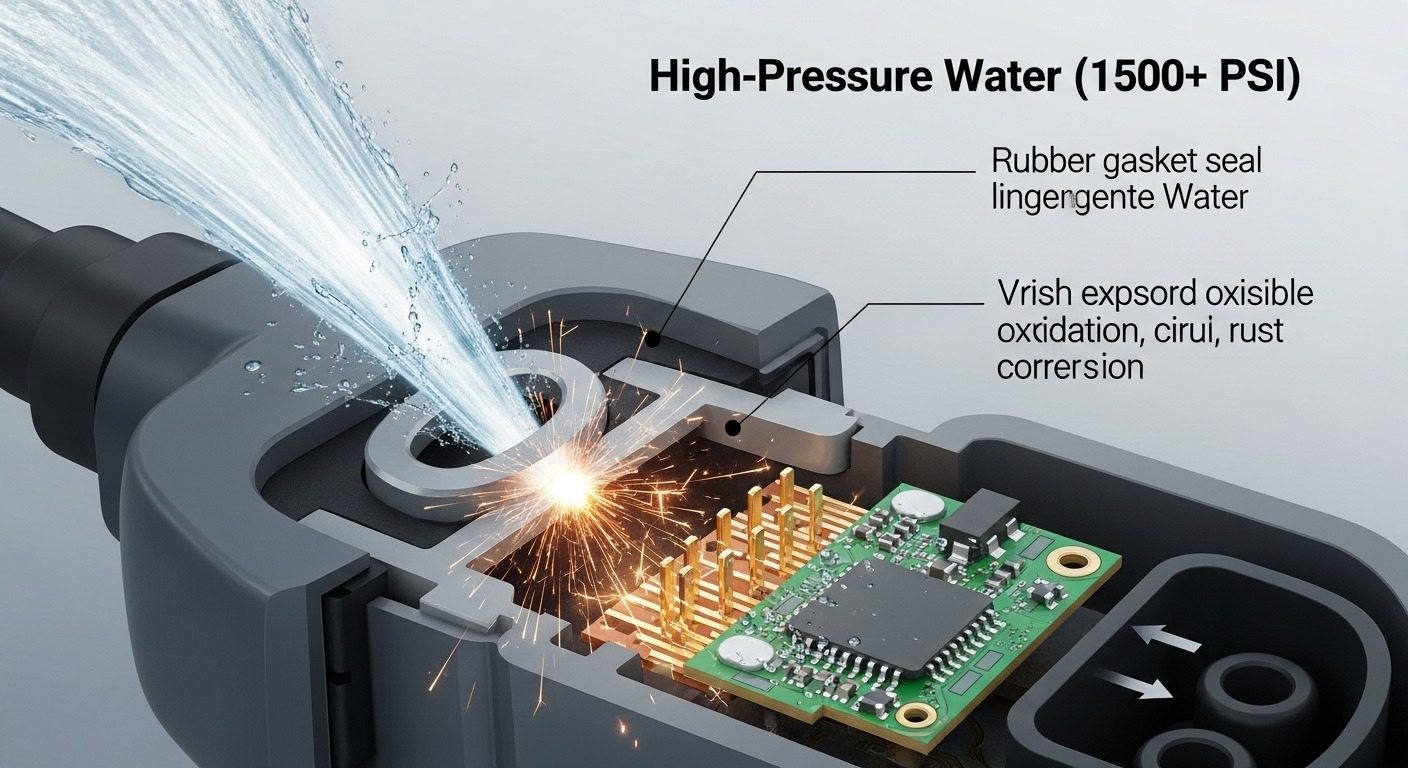
The charging connector represents the Achilles’ heel of any EV charging system. These connectors contain precision-engineered pins that carry both power and data signals, and they’re designed with gaskets and seals that work great against Vancouver’s regular drizzle but can’t withstand the sustained assault of pressurized water. When water forces its way past these seals, it doesn’t just sit there politely – it starts an electrochemical corrosion process that eats away at copper and steel components from the inside out.
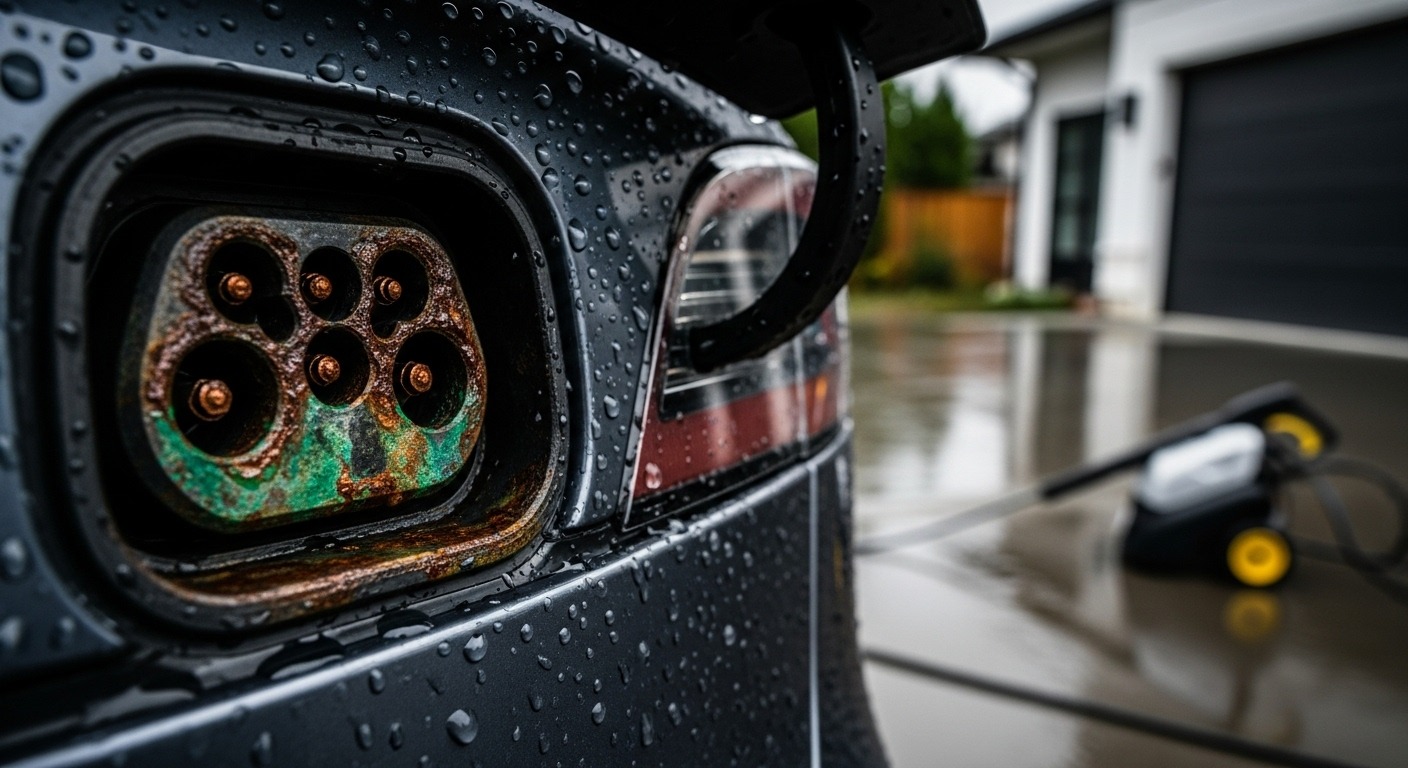
Here’s where things get expensive fast. A Tesla owner recently discovered this the hard way when their charging port developed visible copper oxidation after their driveway got the pressure washing treatment. The damage required a complete port replacement that clocked in at over $4,000, and because the damage pattern showed evidence of water intrusion rather than normal wear, Tesla classified it as user-caused damage that wasn’t covered under warranty. That’s a pretty steep price for a clean driveway.
But the damage doesn’t stop at the charging port. Water that gets forced into your home charging station can cause problems that don’t show up immediately. Circuit boards can develop slow corrosion that causes intermittent failures, relays can stick or fail to engage properly, and internal wiring can develop resistance that creates heat buildup during charging cycles. These problems often take weeks or months to fully manifest, making it nearly impossible to definitively link them back to pressure washing activities – which is exactly why manufacturers are so strict about their cleaning guidelines.
Ground fault detection systems add another layer of complexity to this situation. While these safety devices are designed to cut power if they detect electrical irregularities, they can’t always catch every possible fault condition, especially when water has accumulated gradually and created multiple small corrosion sites throughout the equipment. This means your charging station might keep working normally for weeks after water damage occurs, only to fail catastrophically when you least expect it.
How Vancouver’s Climate Amplifies EV Charging Risks
Living in Vancouver means dealing with a climate that’s basically designed to test the limits of outdoor electrical equipment. We get rain for what feels like eight months out of the year, our air carries salt from the ocean, and we have this lovely cycle of wet-dry-wet conditions that accelerates corrosion processes way beyond what most equipment manufacturers plan for. When you add pressure washing to this environmental mix, you’re essentially putting your charging equipment through an accelerated torture test.
The salt content in Vancouver’s air deserves special attention because it turns regular moisture into an electrolyte that supercharges corrosion. Even if you live several kilometers from the water, salt particles carried by wind can settle on your charging equipment and create corrosion sites when combined with moisture. During pressure washing, this salt gets concentrated and driven deeper into equipment crevices, where it continues to cause damage long after the cleaning is finished.
Vancouver’s temperature fluctuations create another challenge that pressure washing can worsen. When equipment heats up during charging cycles and then cools down with the ambient air, materials expand and contract at different rates. This natural process can create microscopic gaps in seals and gaskets – gaps that are normally too small to allow significant water entry but become highways for high-pressure water infiltration during pressure washing activities.
The timing of when people pressure wash in Vancouver also creates additional risks. Most property owners break out the pressure washer during brief dry spells in spring and summer, often immediately after extended wet periods when equipment seals might already be compromised from constant moisture exposure. Loading additional water pressure onto already-stressed sealing systems is like asking a tired athlete to run a marathon – failure becomes much more likely.
Winter road salt presents yet another challenge. When municipalities treat roads with salt during Vancouver’s occasional winter ice events, that salt gets tracked onto driveways and dissolved into the water used for pressure washing. This creates a highly corrosive solution that’s particularly damaging to the dissimilar metals found in charging equipment. The combination of salt water and high pressure creates an almost guaranteed recipe for accelerated corrosion of charging connectors and internal components.
Understanding EV Charger Warranty Exclusions and Limitations
Here’s where things get legally tricky for EV owners who’ve been enthusiastic about their driveway maintenance. Virtually every EV charger warranty contains explicit language excluding coverage for damage caused by “improper use,” “failure to follow maintenance guidelines,” or “exposure to water beyond normal weather conditions.” These aren’t just lawyer-speak technicalities – they’re carefully crafted exclusions that manufacturers use to avoid paying for damage that could have been prevented by following their recommendations.
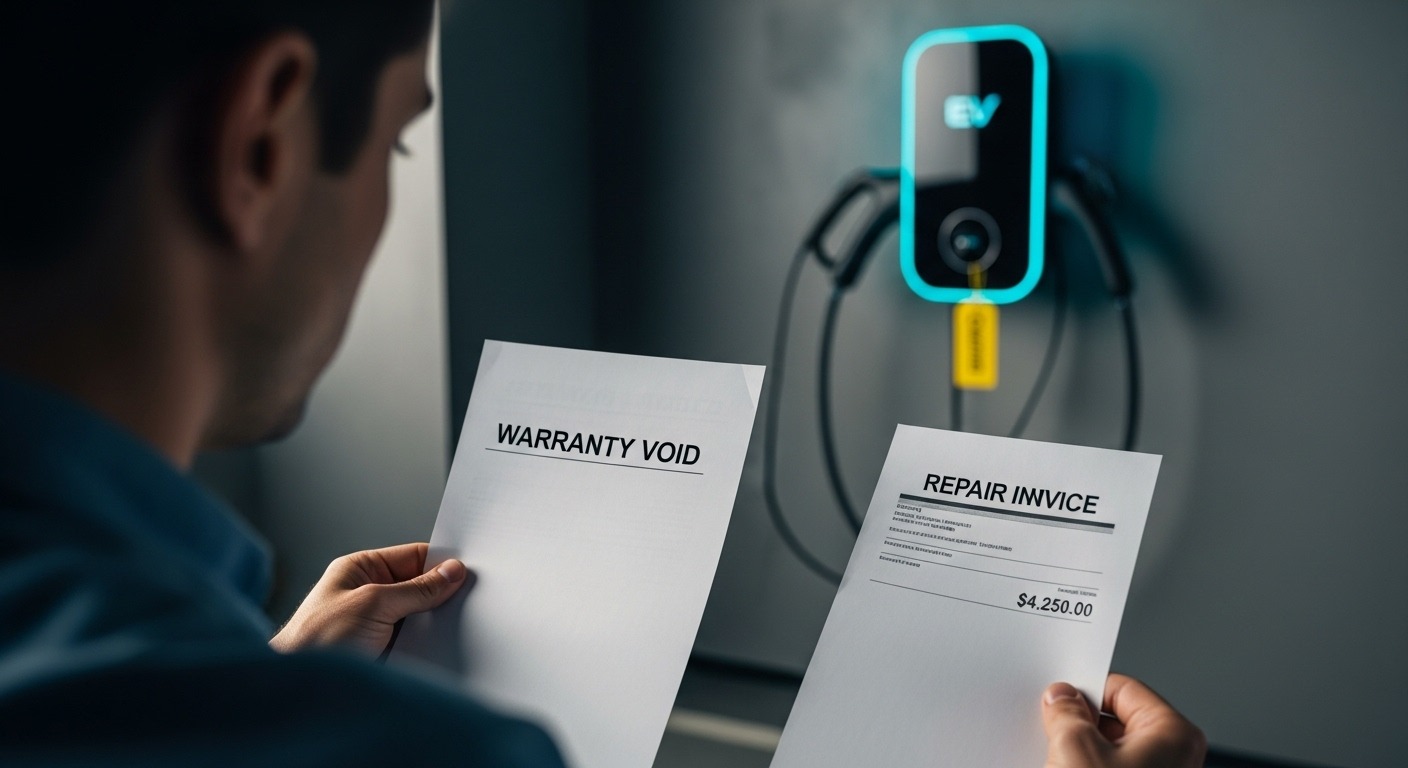
Tesla’s Wall Connector warranty documentation specifically states that the unit should only be cleaned with soft, non-abrasive cloths and mild soap solutions, with explicit warnings against pressure washers and high-pressure cleaning methods. Similar language appears in warranty documents for JuiceBox, ChargePoint, and virtually every other major charging equipment manufacturer. When property owners use pressure washing equipment despite these clear warnings, they’re technically violating the terms of their warranty agreement.
The warranty investigation process adds another layer of complexity that most property owners don’t anticipate. When you file a warranty claim for charging equipment failure, manufacturers don’t just take your word that the equipment failed on its own. They conduct forensic examinations of the damaged components, looking specifically for evidence of how water or other contaminants entered the equipment. If the damage pattern is consistent with high-pressure water intrusion – which leaves distinctive signatures different from gradual moisture accumulation – the manufacturer has clear grounds to deny the warranty claim.
Extended warranty coverage, which can cost several hundred dollars annually for residential charging equipment, contains the same exclusions as standard manufacturer warranties. This means that even property owners who’ve paid extra for extended coverage can lose all protection if pressure washing damage occurs. The financial consequence is particularly painful when you consider that extended warranty premiums might run $200-400 per year, while replacement of damaged charging equipment can cost $3,000-6,000 depending on the installation complexity.
Documentation requirements for warranty claims create additional challenges for property owners who’ve done pressure washing around their charging equipment. Manufacturers increasingly
