
Wondering why your Vancouver composite deck is developing mysterious dark spots and slippery surfaces despite being marketed as “maintenance-free”? Recent investigations reveal that composite decking in the Pacific Northwest’s wet climate harbors mold and staining issues that manufacturers rarely discuss publicly, threatening both aesthetics and structural integrity of these premium investments.
Composite decking has revolutionized residential outdoor spaces by promising low-maintenance alternatives to traditional wood, yet homeowners throughout Vancouver are discovering an uncomfortable truth: these premium investments are becoming breeding grounds for mold, mildew, and stubborn stains that threaten both aesthetics and structural integrity. While manufacturers promote composite materials as virtually maintenance-free, the reality in the Pacific Northwest’s wet climate reveals a far more complex picture where wood flour composites absorb moisture like sponges, creating perfect environments for fungal growth that standard cleaning methods often fail to eliminate completely.
The critical distinction between high-performance composite lines like Trex Transcend and earlier-generation products, combined with Vancouver’s unique environmental pressures, creates a scenario where professional pressure washing and preventative maintenance emerge not as luxury services but as essential protections for preserving these significant investments. Understanding how Vancouver’s marine climate interacts with composite deck materials becomes crucial for homeowners seeking to maximize their outdoor living space investments while avoiding costly premature replacement.
This comprehensive analysis examines why composite decks in Vancouver’s wet climate require specialized maintenance approaches, how mold and staining develop within the material structure, and why professional pressure washing services represent cost-effective protection rather than unnecessary expenses. The evidence reveals that proactive maintenance strategies specifically adapted to the Pacific Northwest climate can extend composite deck lifespan from typical 10-15 years to the full 25-year warranty period.
Key Outtakes:
- Composite decking in Vancouver’s wet climate requires semi-annual professional cleaning to prevent deep mold penetration that compromises warranty coverage and material integrity.
- Early-generation composite products contain 60-70% wood flour that absorbs moisture, creating conditions where mold colonization occurs within weeks without proper maintenance protocols.
- Professional soft-washing methods using low-pressure techniques prove significantly more effective than high-pressure washing, which can damage boards and void manufacturer warranties.
- Preventative maintenance combined with proper drainage and ventilation provides the most cost-effective long-term protection, potentially extending composite deck lifespan to the full warranty period.
- DIY cleaning mistakes can void warranty coverage and require costly board replacement, making professional services economically advantageous despite higher upfront costs.
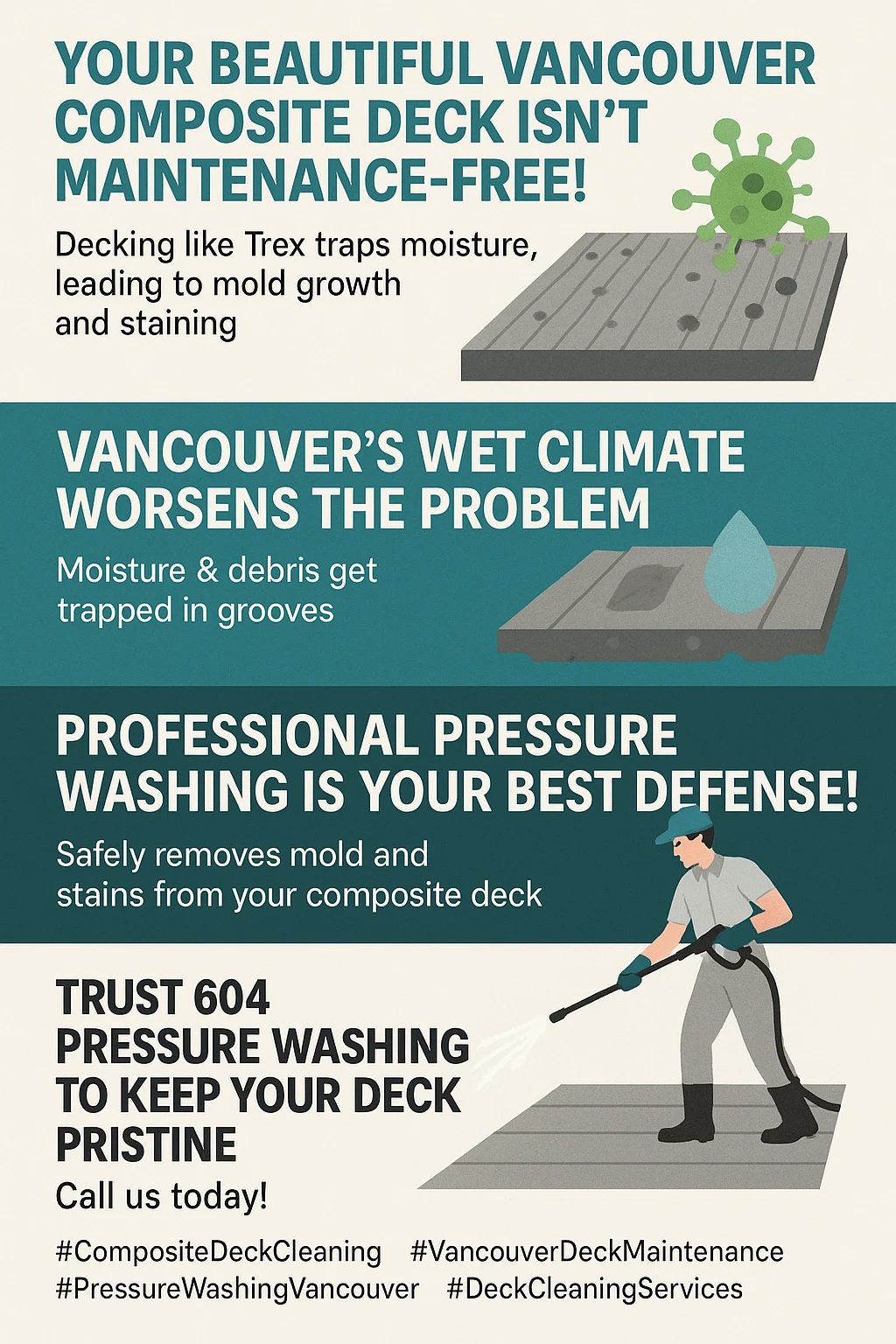
Understanding Composite Decking Vulnerabilities in Vancouver’s Climate
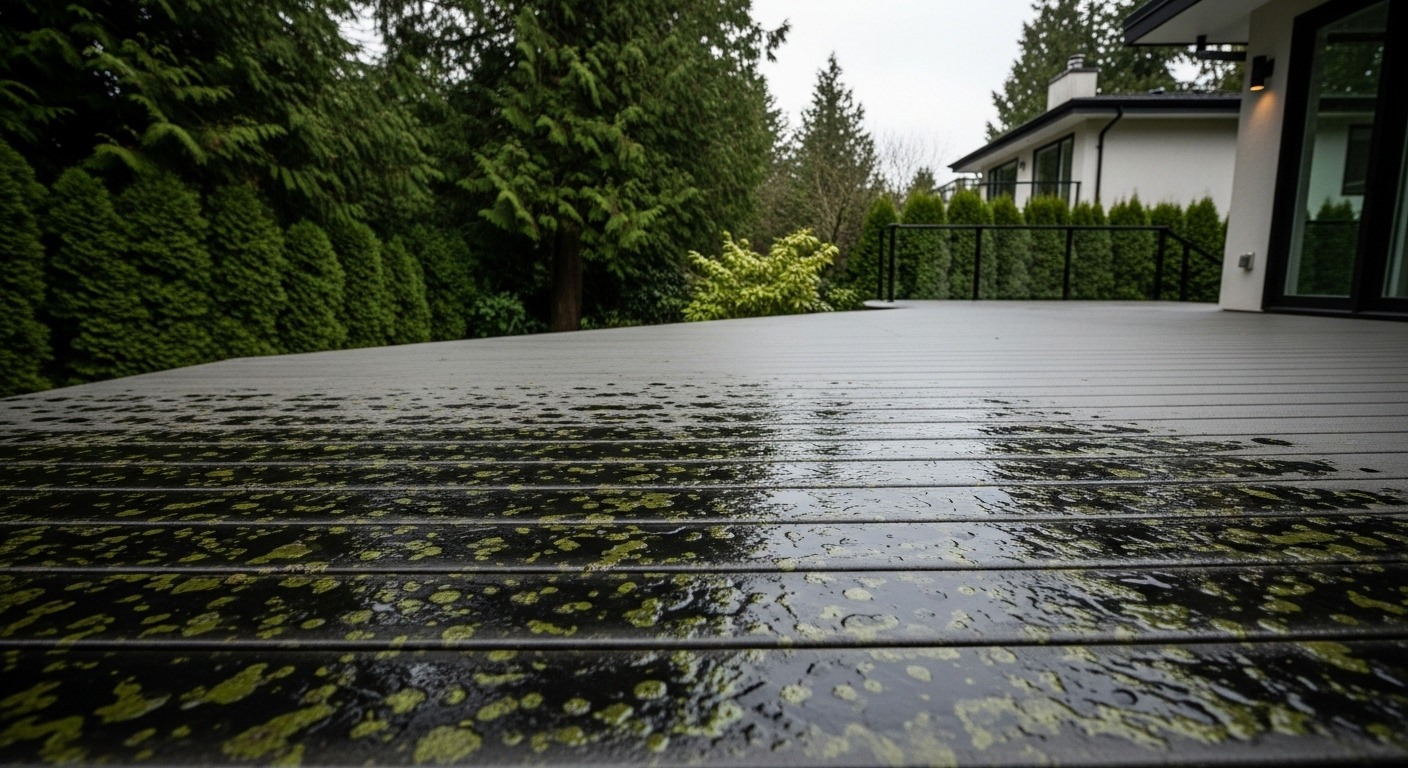
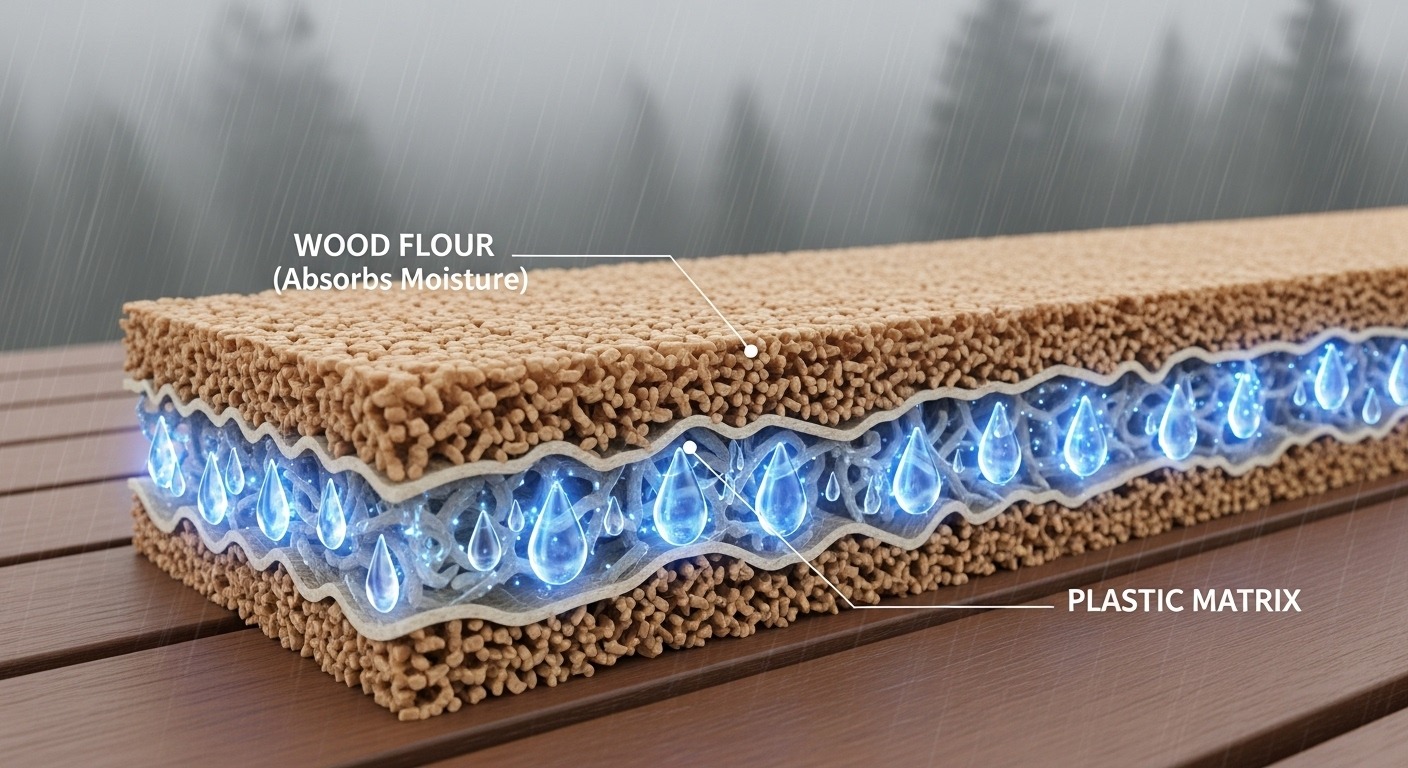
Vancouver’s marine climate, characterized by persistent moisture, moderate temperatures hovering between 8-15 degrees Celsius annually, and frequent precipitation exceeding 1,200 millimeters yearly, creates environmental conditions that are essentially perfect for mold and mildew colonization on any porous outdoor surface. Composite decking, despite marketing claims of extreme durability, represents a fundamentally different challenge than traditional wood decks because the material composition itself becomes a liability in these conditions. The wood flour particles embedded within the plastic matrix—typically comprising 50-70% of the total material composition—retain moisture far more effectively than solid wood boards, and this retained moisture remains trapped within the composite structure where it continuously feeds fungal growth that cannot be easily accessed or eliminated through standard cleaning methods.
The geographical and meteorological reality of the Greater Vancouver area compounds these material vulnerabilities significantly. The region’s elevation of sea level to moderate mountain zones creates moisture-trapping fog layers during fall and winter months, and the proximity to the Pacific Ocean means that salt air combines with moisture to accelerate material degradation processes. When these environmental factors interact with composite decking that lacks proper installation spacing—a common oversight where boards are installed with gaps narrower than the manufacturer-recommended 1/4 inch minimum—water becomes trapped between boards and underneath the deck structure, creating stagnant conditions that accelerate mold growth exponentially.
Furthermore, the construction standards for composite decks in Vancouver frequently feature joist spacing of 16 inches on center, matching traditional wood deck specifications, when many composite manufacturers actually recommend closer spacing of 12 inches on center to minimize flex and moisture accumulation. This installation mismatch, combined with Vancouver’s consistently cool temperatures between 3-18 degrees Celsius throughout the year, creates conditions where mold spores remain viable for extended periods rather than being killed by temperature fluctuations. The result is a perfect storm: composite materials that inherently absorb and retain moisture, installation methods that trap water rather than promote drainage, and climatic conditions that provide year-round growing seasons for fungal organisms.
The Mold Problem: Why Composite Decks Harbor Fungal Growth
Building upon Vancouver’s challenging environmental conditions, the mold colonization process in composite decking follows predictable patterns that homeowners rarely understand until significant damage has occurred. Mold proliferation on composite decking results from a convergence of material science, environmental chemistry, and microscopic biology that goes far deeper than surface-level aesthetics. Early-generation composite products, particularly those manufactured before 2010 when Trex introduced its Transcend line with protective capping, suffered from extensive class-action litigation precisely because the wood flour components provided an ideal substrate for mold colonization.
Research analyzing mold growth rates on wood-plastic composites demonstrates that mold susceptibility increases proportionally with wood content, with 60-70% wood content composites showing complete colonization after seven to eight weeks of exposure to humid conditions. The structure of wood flour particles at microscopic scale reveals why mold penetration becomes so problematic and difficult to remediate. These particles, typically 60-mesh or finer grind, possess high surface area relative to their volume, creating countless microscopic crevices where mold spores can establish colonies protected from surface cleaning attempts. Once mold hyphae penetrate into these fissures within the composite material itself—rather than merely growing on the surface—removing the fungal growth becomes extraordinarily difficult because the organisms become embedded within the material rather than simply adhering to it.
The role of lubricants used in composite manufacturing further complicates the mold equation. Research specifically examining 70% wood content composites shows that certain lubricants, particularly certain formulations of ethylene bis-stearamide (EBS), actually promote initial mold growth rates higher than unlubricated materials. While zinc stearate lubricants provide some antimicrobial properties at lower loadings, higher concentrations can paradoxically support mold growth by altering surface chemistry in ways that favor fungal colonization. Manufacturers subsequently addressed these issues through the addition of fungicides—chlorothalonil at 1.0-1.5% and zinc borate at 3-5% proved effective in limiting mold growth—but only products specifically manufactured with these inhibitors provide reliable mold resistance.
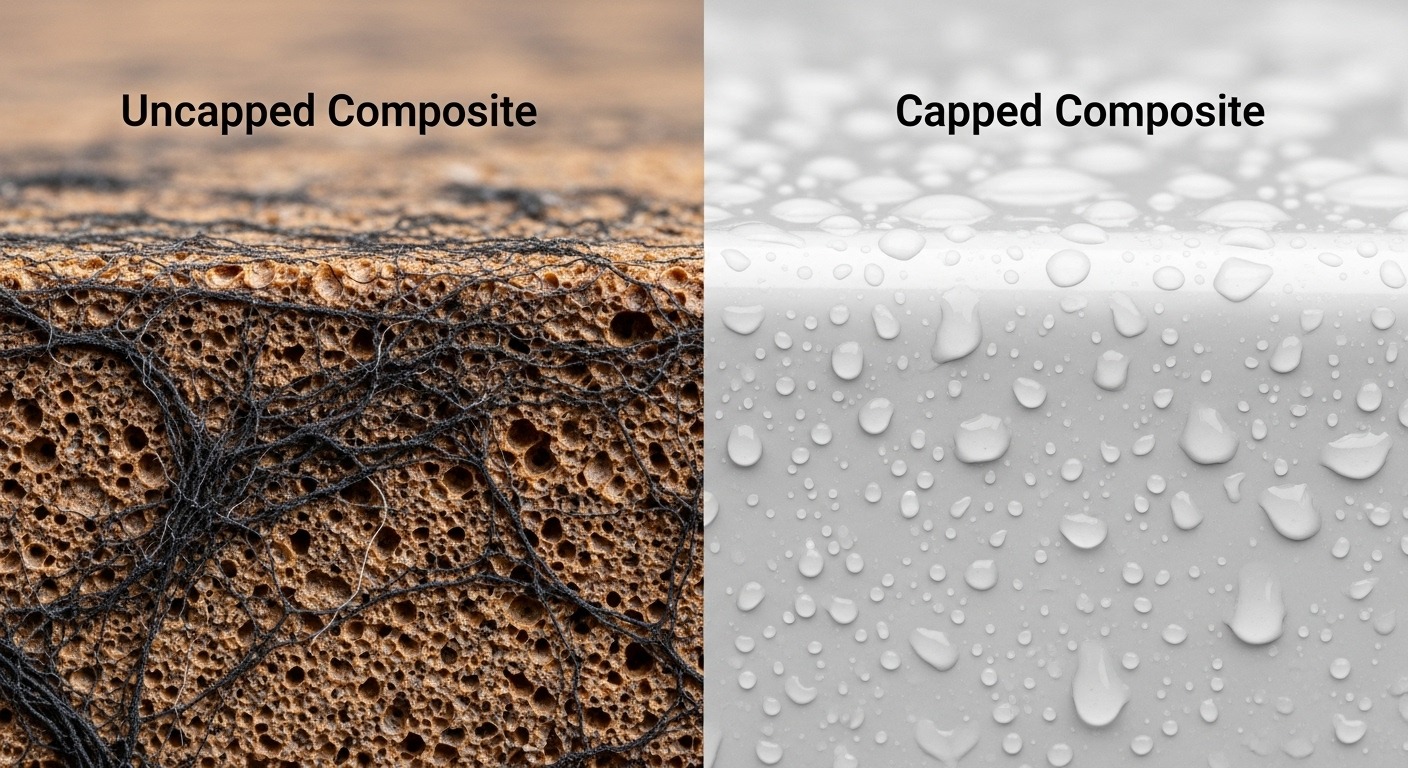
Critical distinction exists between capped and uncapped composite boards in their susceptibility to mold penetration. Uncapped composites, particularly first-generation Trex products, expose the porous wood-plastic mixture directly to moisture and fungal spores on all surfaces. The protective polymer coating applied to three sides of Transcend boards prevents surface mold from spreading into the core material, though research indicates the interior remains highly susceptible to mold growth in the presence of moisture. PVC-based composites, containing zero wood content, eliminate mold susceptibility entirely since fungi require organic material to propagate, though surface mold can still accumulate on debris deposits.
Professional cleaning specialists working in Vancouver have observed that mold patterns on composite decks follow predictable geographic patterns related to moisture and shade exposure. Decks facing north or northwest with tree cover and inadequate air circulation develop mold most aggressively. Areas where gutters or downspouts discharge water without adequate drainage, or where plants remain in contact with deck edges, show accelerated mold colonization. Most critically, the space underneath decks—often neglected during cleaning and maintenance—develops severe mold growth when ventilation is inadequate or debris accumulates.
Staining Issues: Beyond Surface Aesthetics to Material Degradation
The progression from mold colonization to permanent staining represents a critical transition point where aesthetic concerns transform into structural integrity issues requiring professional intervention. While mold represents the most serious structural threat to composite decking, staining presents equally persistent challenges that many homeowners underestimate in terms of long-term material impact. Composite decking exhibits porosity characteristics that trap stains rather than allowing them to remain on the surface, meaning
