
Why Vancouver’s New Condo Balcony Glass Railings Are Creating Dangerous Privacy and Safety Issues (And How Pressure Washing Your Glass Barriers Restores Clear Views While Preventing Slip Hazards)
Struggling with Vancouver’s modern glass railing balconies that seemed like the perfect upgrade but now feel like living in a fishbowl? You’re not alone—these sleek transparent barriers are creating unexpected privacy invasions and safety hazards that most condo buyers never anticipated when they signed on the dotted line.
Picture this: you’re sipping your morning coffee on your gorgeous new glass-railed balcony, admiring those stunning North Shore mountain views, when you suddenly realize your neighbor three floors up has a perfect view of your weekend loungewear situation. Or maybe you’ve discovered that your “safe” glass railing has developed a slip-hazard slime coating thanks to Vancouver’s legendary rain and humidity. Welcome to the unintended consequences of Vancouver’s glass railing revolution—a design trend that’s as beautiful as it is problematic.
As someone who’s spent countless hours researching Vancouver’s condo maintenance challenges (yes, I’m that person who gets excited about building codes), I’ve discovered that these stunning glass barriers come with a whole playbook of issues that nobody warns you about. From privacy exposure that makes you feel like you’re living in a reality TV show to safety hazards that multiply during our rainy seasons, glass railings require a completely different approach to maintenance and management than traditional opaque barriers.
The good news? Understanding these challenges and implementing proper maintenance protocols—especially when it comes to pressure washing and cleaning—can transform your glass railing from a source of stress into the asset it was meant to be. Let’s dive deep into why Vancouver’s glass railings are causing headaches and how pressure washing restoration can actually solve multiple problems simultaneously.
Key Outtakes:
- Glass railing transparency that provides aesthetic benefits simultaneously creates privacy exposure requiring strategic solutions beyond standard window coverings
- Pressure washing glass railings carries significant water infiltration risks that can cause catastrophic structural damage if proper techniques are not followed
- Vancouver’s climate—with high rainfall, salt air, and freeze-thaw cycles—accelerates glass railing deterioration requiring specialized maintenance protocols different from other regions
- Professional cleaning services bring regulatory knowledge and insurance protection that DIY approaches cannot match, particularly important for high-rise residential buildings
- Slip hazards from wet glass and algae growth represent ongoing daily safety risks that require proactive maintenance scheduling and resident education
The Privacy Paradox: Glass Railings Create Unintended Visual Exposure
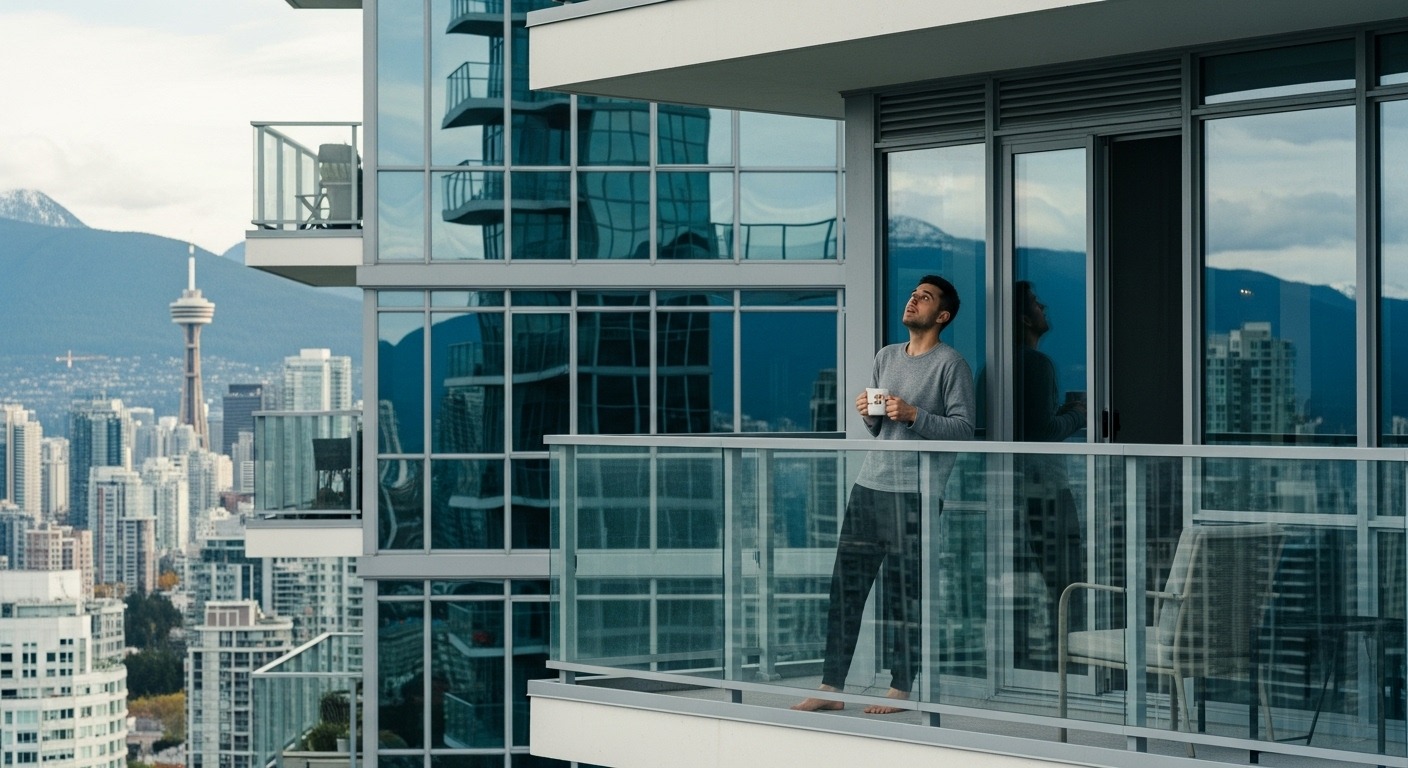
Here’s the thing about glass railings that real estate agents conveniently forget to mention during those glossy condo tours: the same transparency that creates those Instagram-worthy views also turns your private balcony into a public viewing platform. It’s like living in a beautifully designed aquarium where you’re simultaneously the observer and the observed fish.
The privacy issues with glass railings aren’t just about nosy neighbors—they’re about fundamental changes to how you experience your outdoor space. Ground-floor units face the most obvious challenges, where pedestrians on streets or in adjacent courtyards can observe your balcony activities, personal belongings, and even glimpses into your interior spaces through sliding doors. But the exposure problems extend far beyond street level. Mid-level and upper-floor units experience what I call “helicopter views” from higher-elevation neighbors, while end units may face lateral viewing from adjacent properties at similar heights.
What makes this particularly frustrating in Vancouver’s dense condo landscape is that privacy exposure varies dramatically throughout the day and seasons. During our frequent rainy periods, natural water accumulation and foggy conditions reduce visibility, providing temporary privacy that disappears completely during clear weather days. This seasonal variation means residents may not fully understand their privacy exposure until they’ve lived through multiple weather cycles—often months after moving in when it’s too late for simple solutions.
The psychological impact of this privacy loss shouldn’t be underestimated. Research shows that perceived privacy significantly affects how people use and enjoy their outdoor spaces. When residents feel exposed, they naturally limit their balcony use, essentially sacrificing one of the primary benefits they paid for when choosing their unit. Some residents resort to closing blinds or curtains completely, which defeats the purpose of the transparent railings and can make interior spaces feel closed off from natural light.
Vancouver’s unique approach to balcony enclosure regulations acknowledges these privacy challenges while maintaining design consistency across buildings. The planning department requires at least 40 percent of window area in enclosed balconies to remain openable, recognizing that completely sealing these spaces creates new problems including moisture management and ventilation challenges that can compound privacy issues.
Safety Hazards Beyond Initial Installation
Moving beyond the privacy fishbowl effect, glass railings introduce safety hazards that multiply over time and become particularly acute in Vancouver’s wet climate. The most serious—and often invisible—threat involves water infiltration at attachment points where railings connect to the building structure. This isn’t just a minor maintenance annoyance; documented cases show water infiltration causing catastrophic structural damage requiring six-figure repairs.
Here’s where things get really scary: water infiltration often occurs silently for years before the damage becomes visible. A documented case in Bridgehampton involved a glass railing system that seemed perfectly functional for three years before water infiltration was discovered to have caused $220,000 in structural damage to ceilings and walls. Another Manhattan installation with 230 linear feet of glass railing failed to prevent water infiltration, leading to widespread roofing and structural deterioration. These aren’t isolated incidents—they represent a pattern of failure when proper waterproofing isn’t maintained.
Vancouver’s freeze-thaw cycles create particularly aggressive stress on these sealing points. Water that enters hairline cracks expands when frozen, progressively enlarging openings and compromising structural integrity. This cycle repeats dozens of times throughout Vancouver’s transition seasons, when temperatures fluctuate daily across the freezing point. The damage accumulates incrementally until sealing completely fails and major water infiltration begins.
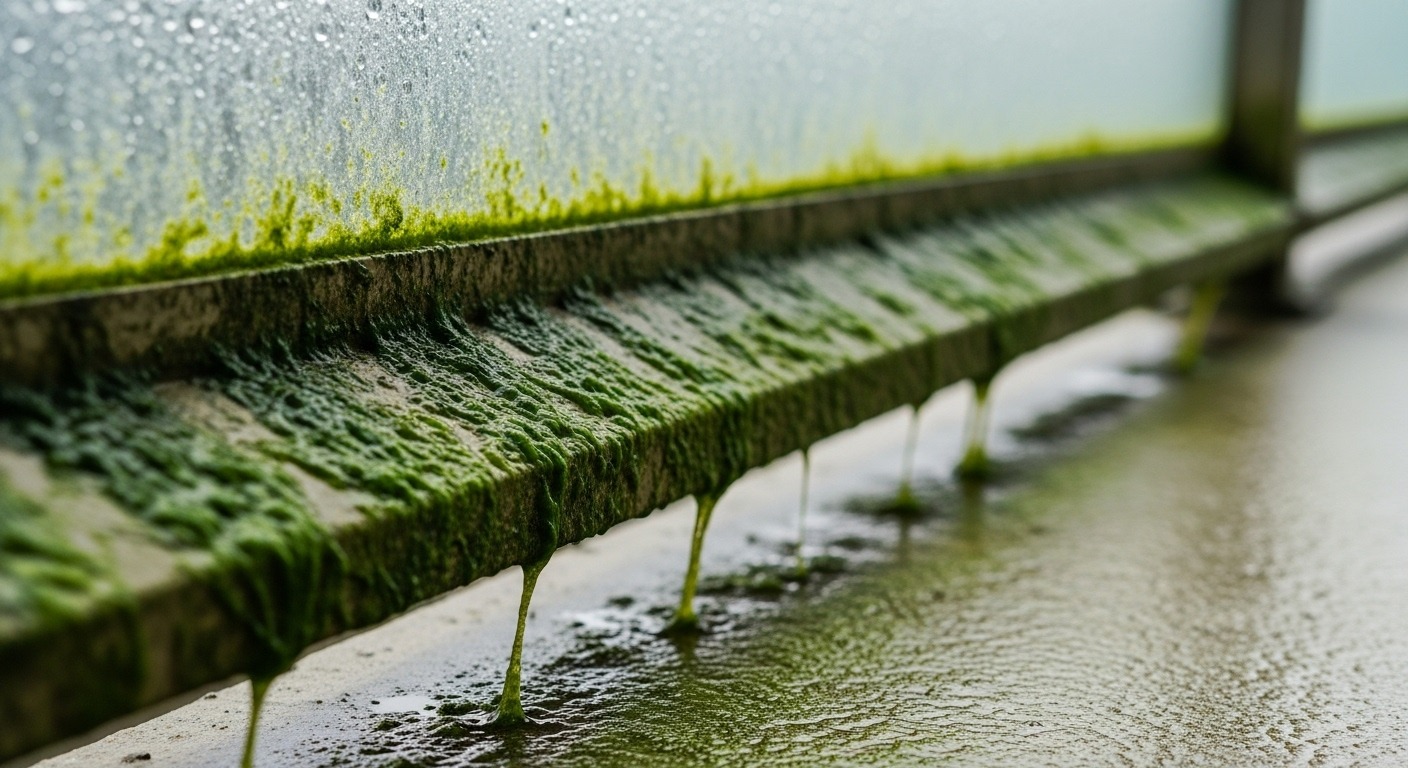
But water infiltration represents just one category of safety hazards associated with glass railings. Wet glass creates slip hazards that intensify dramatically when algae and mold establish themselves on surfaces. Clean wet glass is slippery enough to be dangerous, but algae-covered glass becomes treacherously slick—almost like trying to walk on soap. Vancouver’s persistent moisture and mild temperatures create ideal conditions for rapid biological growth, meaning railings can develop hazardous surface conditions within days of cleaning.
The horizontal surfaces of glass railing systems accumulate water more readily than vertical panels, creating pools that freeze during winter weather or remain stagnant during warm periods. These pools support algae growth and become slip hazards while simultaneously creating ice hazards during winter months. Property managers must understand that balcony load capacity limits of 100 pounds per square foot for four-plus story buildings can be exceeded when ice accumulates or when heavy cleaning equipment is left on balconies during maintenance.
Pressure Washing Risks and Proper Techniques
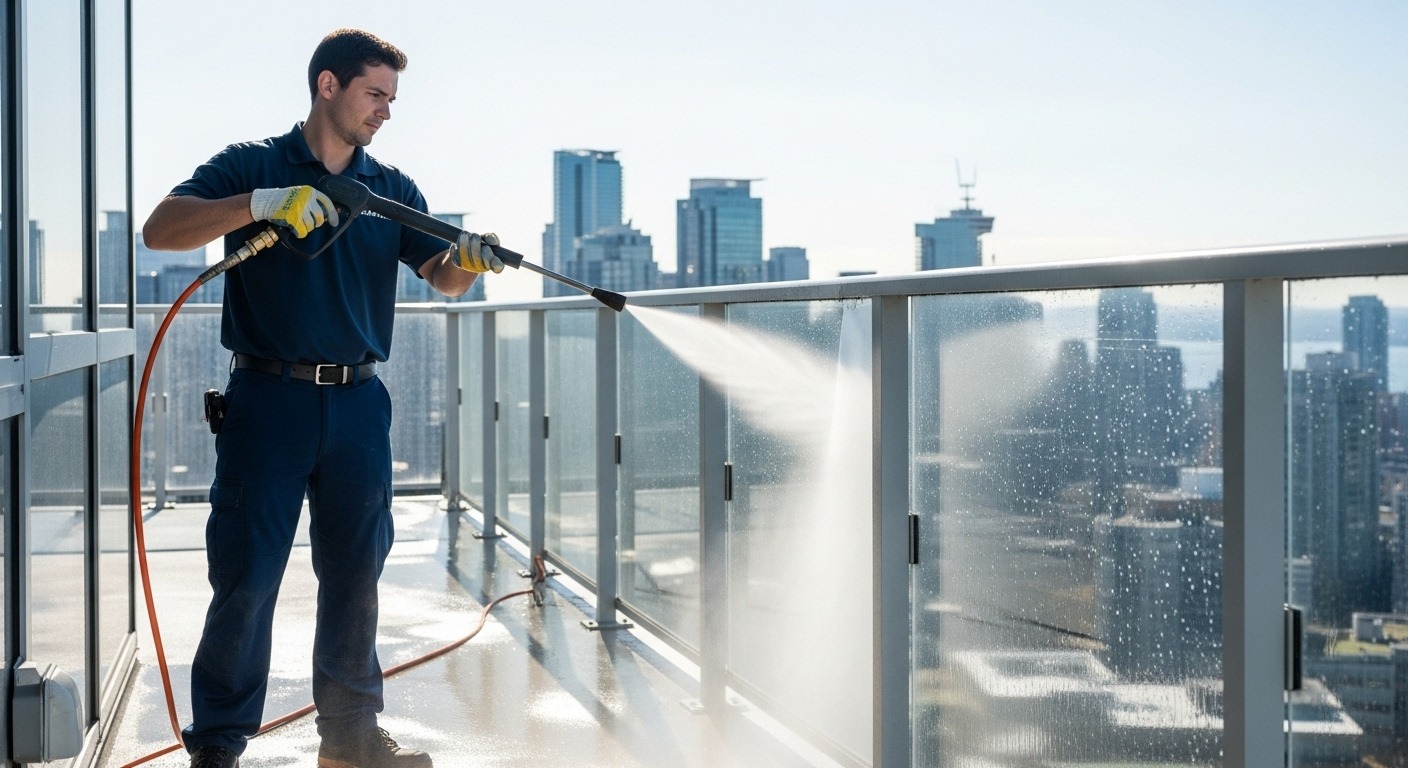
Now we get to the maintenance paradox that catches most Vancouver condo owners completely off guard. Pressure washing seems like the obvious solution for restoring glass clarity and removing that slippery algae buildup—but it’s also the fastest way to create the exact water infiltration problems we just discussed. It’s like using a fire hose to water delicate seedlings; the tool is powerful, but wrong application destroys what you’re trying to help.
Most residential-grade pressure washers available at Home Depot or Canadian Tire deliver 2500-3000 PSI (pounds per square inch), which is appropriate for cleaning concrete driveways but dangerously excessive for glass railing systems. At these pressures, water gets forced into sealed joints, crevices, and connection points that are supposed to remain waterproof. The result is accelerated water infiltration that can take months or years to manifest as visible interior damage, making it nearly impossible to connect the pressure washing activity to the eventual expensive repairs.
The conservative approach that actually works requires completely different equipment and techniques. Professional-grade equipment should be dialed down to maximum 1000-1500 PSI, using wide-angle nozzles (25-40 degrees, never concentrated 0-degree patterns) maintained at least 12 inches from glass surfaces. The operator must use smooth, even strokes rather than concentrating spray on one area, and pre-treatment with appropriate cleaning solutions should break down soiling before any pressure washing begins.
But here’s the crucial insight most people miss: the pressure washing equipment readily available to consumers delivers dangerously high pressure levels that homeowners often use unknowingly. There’s no clear labeling system that warns consumers about appropriate pressure levels for different materials, and rental equipment rarely comes with detailed guidance about safe application
