
Why Vancouver’s New Synthetic Turf Is Becoming Toxic
Wondering why your brand-new artificial lawn is creating health concerns that nobody warned you about during installation? Discover the hidden chemical dangers lurking beneath Vancouver’s synthetic turf boom and learn why professional cleaning is now mandatory, not optional.
Vancouver homeowners have embraced synthetic turf as the perfect solution to our city’s challenging climate and busy lifestyles. No more weekend mowing sessions in the rain or worrying about brown patches during summer droughts. But beneath those perfectly green plastic blades lies a growing health crisis that most installers never mention during their sales pitch.
Recent research has revealed that artificial turf contains hundreds of toxic chemicals including PFAS “forever chemicals,” carcinogenic PAHs, and heavy metals like lead with no safe exposure levels. These substances don’t just sit harmlessly in your yard—they off-gas into your home’s air, leach into Vancouver’s watershed, and accumulate on your children’s skin every time they play outside.
Key Outtakes:
- Synthetic turf contains PFAS, PAHs, heavy metals, and other documented carcinogens that require professional removal through specialized cleaning methods, not standard maintenance
- Vancouver’s wet maritime climate creates year-round bacterial and mold colonization requiring more frequent professional intervention than drier climates where seasonal variations naturally disrupt biofilm growth
- Standard pressure washing damages artificial turf, voids manufacturer warranties, and forces contaminants deeper into the system rather than eliminating them
- Professional synthetic turf cleaning uses multi-step sanitization processes with specialized equipment that preserve warranty coverage while addressing root causes of contamination
- Natural grass represents a safer, environmentally superior alternative despite higher maintenance appearance, particularly when professional cleaning costs are factored into artificial turf budgets
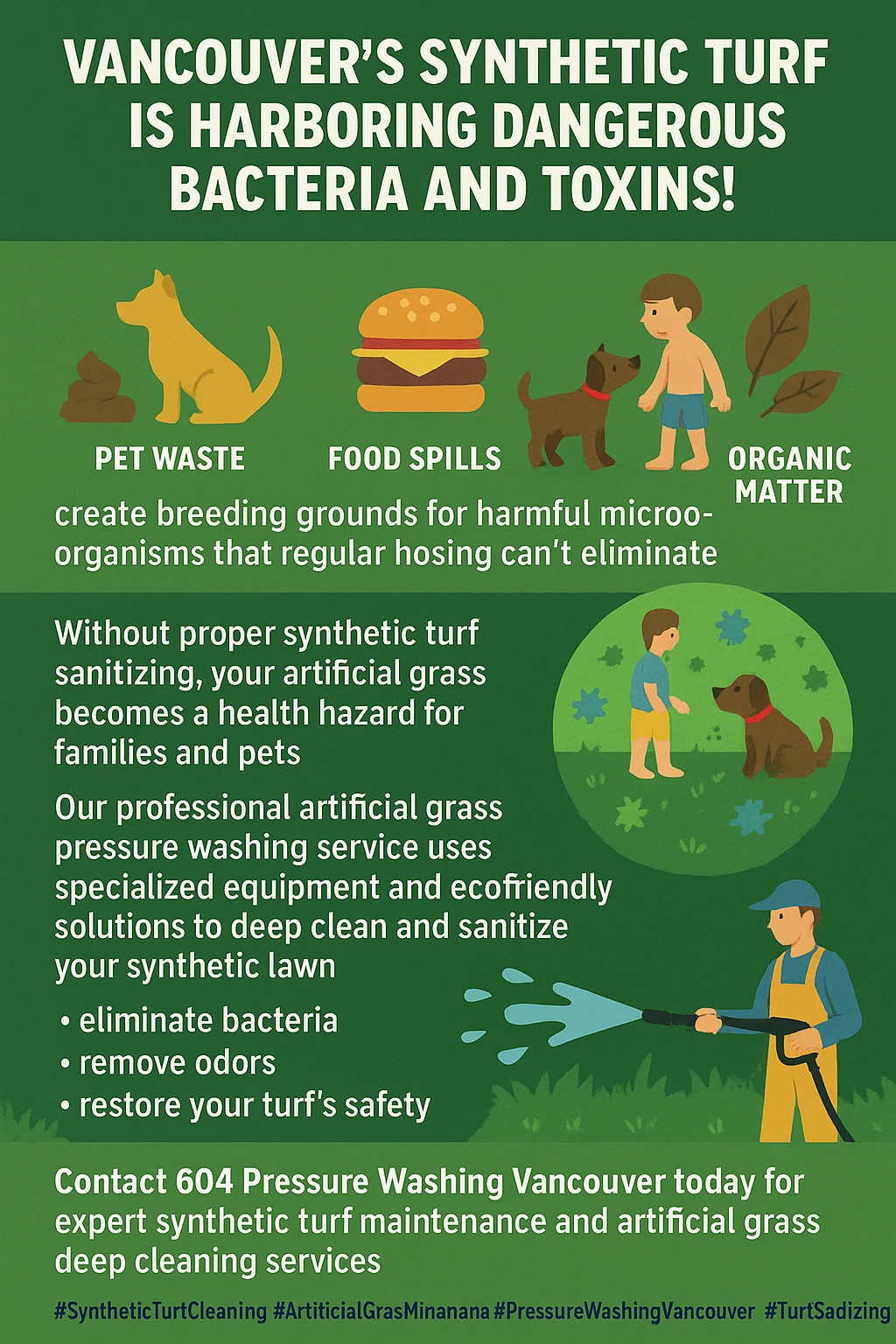
The Hidden Chemical Crisis in Vancouver’s Artificial Turf
What most Vancouver residents don’t realize is that their beautiful synthetic lawn is essentially a concentrated collection of industrial chemicals designed to mimic grass but never intended for prolonged human contact. The plastic grass blades themselves contain per- and polyfluoroalkyl substances (PFAS), commonly called “forever chemicals” because they persist indefinitely in both the environment and human body.
A preliminary 2024 study in California found that young soccer players had more than double the level of PFOS (a particularly toxic PFAS compound) on their skin after playing on artificial turf. Meanwhile, playing on real grass actually decreased PFOS levels. This research demonstrates that artificial turf doesn’t just contain these chemicals—it actively transfers them to anyone who comes into contact with the surface.
The crumb rubber infill layer presents even more serious concerns for Vancouver families. Research from Yale University found that recycled tire crumb contains approximately 96 identified chemicals, with 20% classified as probable carcinogens and 40% known to cause breathing problems or skin irritation. Polycyclic aromatic hydrocarbons (PAHs) appear in essentially all crumb rubber samples tested by researchers, and these compounds can bind to DNA while mimicking natural estrogens. Studies show that women with high PAH levels in their blood are 50% more likely to develop breast cancer.
Vancouver’s Climate Amplifies Chemical Exposure
Vancouver’s specific weather patterns create unique chemical exposure risks that most artificial turf articles completely overlook. During our warmer months when temperatures exceed 25°C, synthetic turf surfaces heat up dramatically, causing increased volatilization of PAHs, benzene, toluene, and other volatile compounds from both the crumb rubber infill and plastic components.
Conversely, Vancouver’s wet winters create different but equally concerning exposure pathways. Our city receives approximately 1,168 mm of annual rainfall, and this persistent moisture percolates through turf systems, extracting water-soluble chemicals including heavy metals and certain PFAS compounds. Studies examining rainwater collected from turf installations have consistently detected chemical leachate, meaning contaminated runoff flows directly into Vancouver’s sensitive watersheds.
The combination of acidic rainwater (influenced by marine air masses) and prolonged wet conditions may enhance the leaching of metal contaminants from crumb rubber infill—a phenomenon that hasn’t been thoroughly studied in our Pacific Northwest climate but presents serious implications for soil and groundwater contamination.
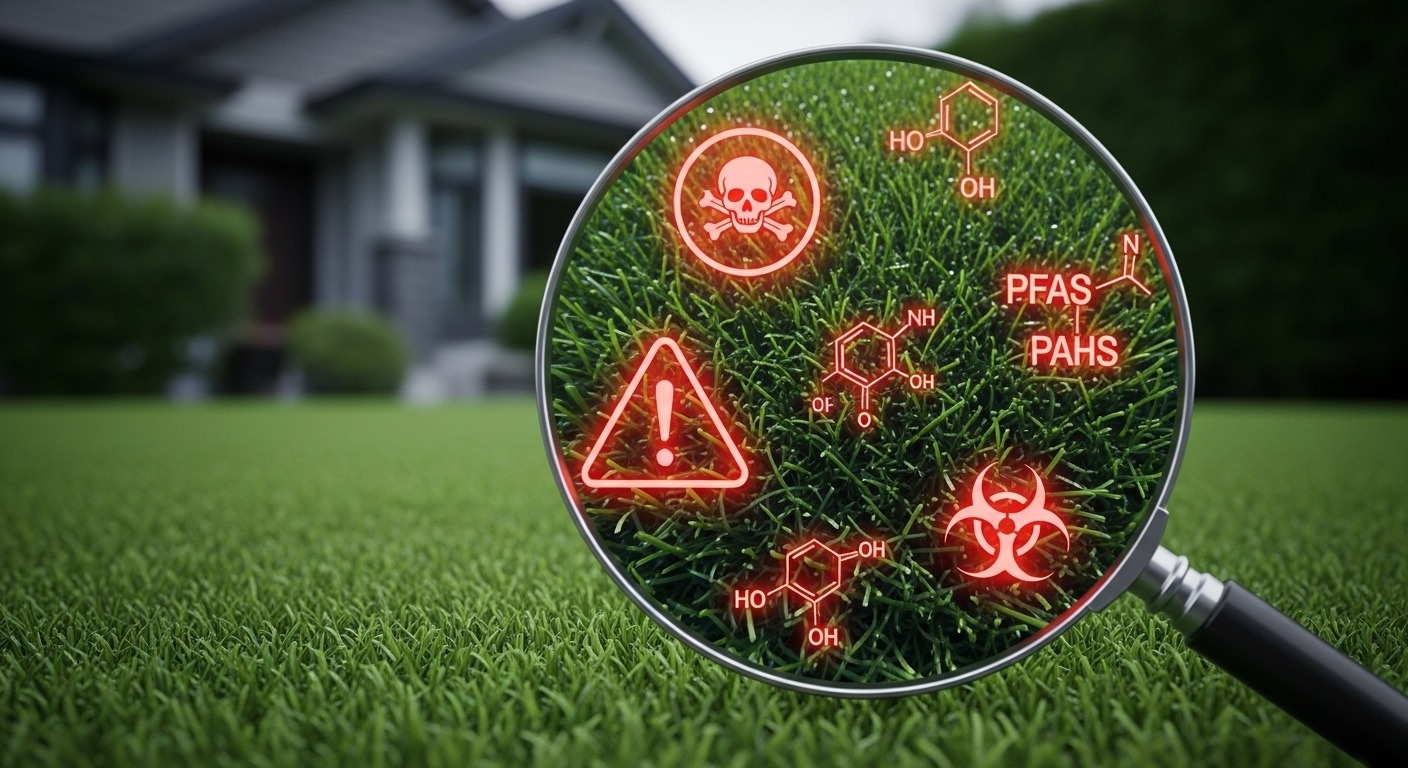
Why Children Face the Greatest Risk
The Children’s Environmental Health Center at Mount Sinai’s Icahn School of Medicine has issued a strong position statement specifically discouraging artificial turf installation because children face uniquely elevated risks. Children’s physiology, behaviors, and rapidly developing organ systems make them far more vulnerable to chemical exposures than adults.
Young children naturally exhibit hand-to-mouth behaviors, directly increasing ingestion risk from turf particles contaminated with PAHs, heavy metals, and other toxicants. They breathe faster than adults, putting them at greater risk for inhalation of off-gassing chemicals. Their higher surface area to body mass ratio means proportionally greater chemical absorption through skin contact.
Perhaps most concerning is the timing issue—vulnerability to artificial turf chemicals persists through the teen years as reproductive and nervous systems continue developing. Children also have more future years of life over which chronic diseases linked to turf chemicals can develop, meaning today’s exposure creates decades of potential health consequences.
Lead Exposure: No Safe Level Exists
Lead appears in essentially all artificial turf samples examined by researchers, and the U.S. Centers for Disease Control has definitively stated that no safe blood lead level exists for children or adults. Lead’s neurotoxic effects on developing brains are well-established and irreversible, making any exposure unacceptable for growing children.
The presence of multiple neurotoxicants including lead, PAHs, benzene, and phthalates in artificial turf creates complex mixture exposures that haven’t been comprehensively studied in real-world childhood scenarios. This chemical cocktail effect may produce health impacts that exceed what would be predicted from individual chemical exposures.
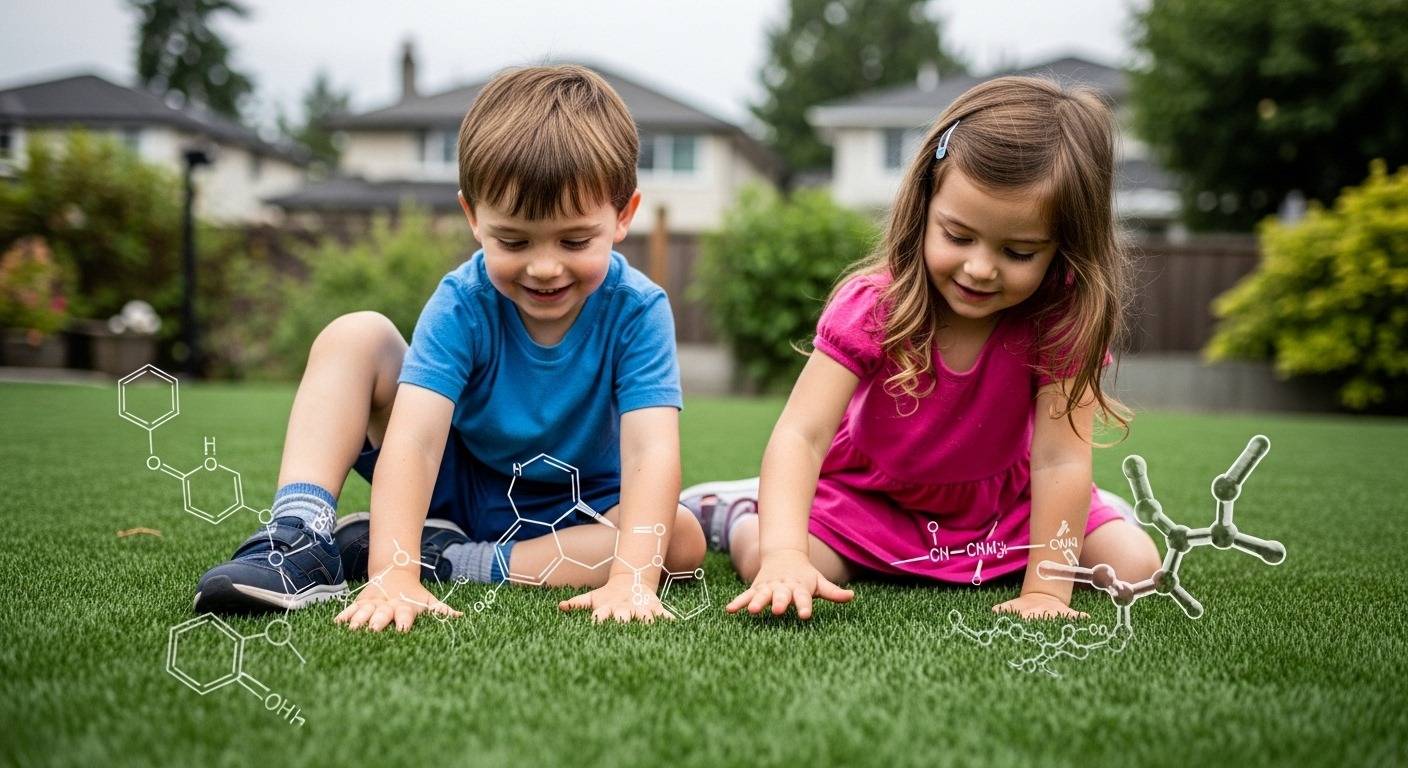
The Dangerous Myth of Pressure Washing
One of the most destructive mistakes Vancouver homeowners make is hiring standard pressure washing services to clean their artificial turf. This approach represents a fundamental misunderstanding of how synthetic turf systems work and directly violates manufacturer warranties while making contamination problems worse, not better.
High-pressure water forces pet urine, feces, and other organic matter deep into the base material where it becomes permanently trapped. Rather than cleaning the surface, pressure washing pushes contaminants into areas where they continue producing odors and encouraging dangerous bacterial growth including methicillin-resistant Staphylococcus aureus (MRSA).
Water pressure also disturbs the carefully engineered base materials under artificial turf, creating humps, pockets, and uneven surfaces that pose trip hazards and compromise the entire system’s integrity. Most critically, pressure washing blasts out significant quantities of infill sand, leaving turf unstable and requiring expensive replacement of materials that maintain the cushioning and drainage properties.
Warranty Voiding and Permanent Damage
Most artificial turf manufacturers explicitly prohibit pressure washing in their product guidelines. Homeowners who use pressure washing services immediately void their warranties, potentially losing thousands of dollars in coverage for systems that cost $10,000-$25,000 to install in typical Vancouver yards.
The damage from pressure washing compounds over time. Water pressure forces apart seams, breaking adhesive bonds between turf sections and requiring expensive repairs. Excessive water promotes weed growth in and around the system, while disturbed base materials create permanent drainage problems that can’t be easily corrected.
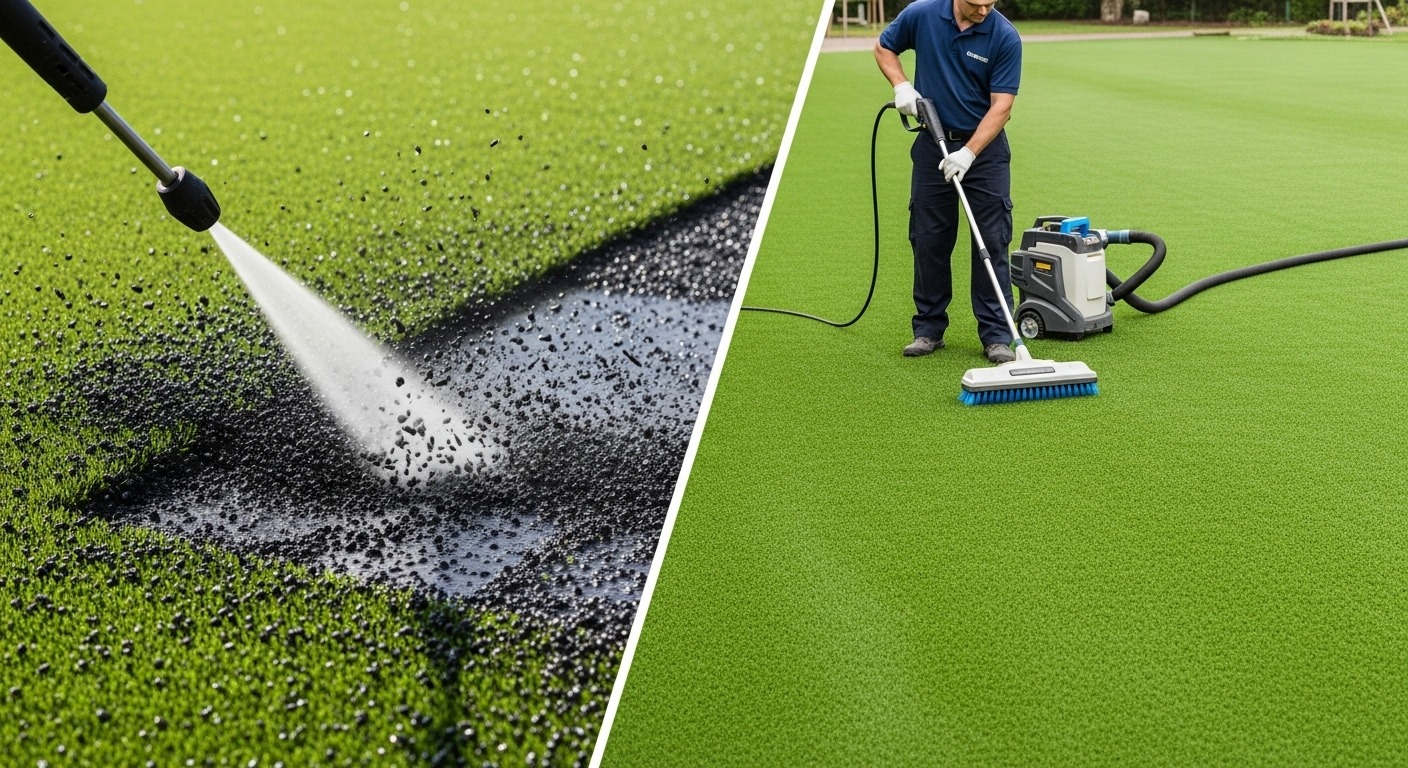
Professional Synthetic Turf Cleaning: The Safe Alternative
Professional artificial turf cleaning services employ fundamentally different techniques designed to sanitize and deodorize without harming the synthetic lawn or voiding warranties. Understanding this multi-step process helps Vancouver residents make informed decisions about maintaining their installations safely.
The industry-standard approach begins with thorough debris removal using specialized turf vacuums and blowers designed to remove leaves, sticks, pet hair, and other organic matter using upward motion rather than downward pressure. This directional approach prevents forcing contaminants deeper into the infill layer where they become problematic.
Deep cleaning follows, where the turf receives treatment with specialized solutions designed to loosen grime, bacteria, and debris trapped within synthetic fibers. Professional-grade equipment and turf-safe disinfectants remove contaminants while restoring proper drainage without damaging the underlying materials. This step addresses not just visible dirt but also the bacterial biofilms and organic residues that accumulate over months of use.
Deodorizing and Sanitizing Process
Professional services use micron fogging equipment to apply proprietary, turf-safe deodorizers and stabilized hydrogen peroxide solutions that eliminate 99.9% of bacteria, viruses, and germs. These specialized treatments break down ammonia crystals in pet urine that cause persistent odors, addressing root causes rather than masking smells with fragrances.
Power brooming represents the final critical step, restoring blade posture and maintaining the aesthetic appearance that homeowners expect. Professional equipment lifts flattened synthetic fibers while redistributing compacted infill to maintain proper cushioning and drainage properties throughout the system.
Many services also offer optional infill restoration where antimicrobial or cooling infill can be added to help maintain freshness between professional cleaning sessions. This approach extends the time between required cleanings while improving the overall performance of the artificial turf system.
Vancouver’s Unique Microbial Challenges
Vancouver’s maritime climate creates microbial ecology conditions on artificial turf that differ significantly from other regions and require more frequent professional intervention than most homeowners anticipate. The combination of year-round moisture, cool temperatures that rarely reach extremes, and high humidity creates ideal conditions for persistent bacterial and fungal colonization.
Unlike drier climates where seasonal temperature variations naturally disrupt biofilm communities, Vancouver’s stable conditions allow Aspergillus species, various algae, and Staphylococcus bacteria to establish robust populations that persist throughout the entire year. Research on biofilm formation demonstrates that these microbial communities dramatically increase bacterial survival and pathogenicity compared to free-floating bacteria.
The maritime air in coastal Vancouver neighborhoods also deposits salt aerosols on artificial turf surfaces, creating additional chemical stress on materials while potentially altering microbial community composition in ways that haven’t been thoroughly studied. This unique combination of factors means Vancouver residents require more consistent, year-round maintenance schedules than residents in seasonally variable climates.
Pet Waste and Bacterial Amplification
Pet ownership dramatically amplifies the microbial challenges facing Vancouver artificial turf owners. Pet waste, urine, and organic matter create ideal breeding conditions for pathogenic bacteria including MRSA and other disease-causing organisms that pose serious health risks to household members.
Professional cleaning services address these concerns through enzymatic treatments specifically designed to break down organic compounds in pet waste while eliminating the bacterial populations that proliferate in contaminated areas. Standard household cleaning approaches cannot effectively address the deep contamination that develops in artificial turf systems exposed to regular pet use.
Cleaning Frequency and Cost Considerations
Most artificial turf cleaning experts recommend professional service at minimum twice yearly for Vancouver’s climate—before spring to remove moss and organic buildup from fall and winter, and before fall to address summer accumulation and prepare for the wet season. However, households with children or multiple pets may require quarterly cleaning to maintain safe, odor-free conditions.
Professional cleaning costs typically range from $225-$299 per visit for residential Vancouver properties, translating to $450-$600 annually for basic twice-yearly service or $900-$1,200 for quarterly maintenance. When these costs are factored into artificial turf budgets, the financial advantage over natural grass becomes much less clear than installation salespeople typically suggest.
Natural grass maintenance in Vancouver requires regular mowing ($1,000-$2,000 annually), occasional fertilization ($100-$300 for organic systems), and supplemental watering during dry periods ($100-$300), totaling approximately $1,200-$2,600 annually for standard care. However, drought-resistant grass varieties and water conservation techniques can reduce natural grass costs to $800-$1,200 annually—comparable to or less expensive than professional artificial turf maintenance when chemical exposure risks are eliminated.
Frequently Asked Questions
Is pressure washing artificial turf ever acceptable for maintenance?
No, pressure washing should never be used on artificial turf under any circumstances. High-pressure water violates manufacturer guidelines, immediately voids warranty coverage, and forces contaminants deeper into the system rather than removing them. The water pressure damages backing materials, splits seams, and blasts out critical infill materials that maintain the system’s structural integrity.
Professional turf cleaning services use specialized low-pressure techniques combined with targeted solutions that sanitize without damaging the installation. Homeowners should only use professional services that explicitly understand artificial turf requirements and use appropriate equipment designed for synthetic surfaces.
How often should Vancouver residents schedule professional synthetic turf cleaning?
Vancouver’s wet climate requires more frequent professional cleaning than drier regions. Minimum twice-yearly cleaning (spring and fall) is essential, but households with children under 10 or multiple pets benefit from quarterly service to address bacterial growth and odor control.
Properties in shaded areas prone to moss growth may require additional cleaning sessions, particularly during Vancouver’s extended rainy season from October through March. Professional services can assess individual properties and recommend customized maintenance schedules based on usage patterns, pet presence, and specific environmental factors.
What chemicals in artificial turf should concern Vancouver families most?
PFAS “forever chemicals” represent the most serious long-term concern because they persist indefinitely in the body and environment while being linked to cancer, immune dysfunction, and reproductive problems. PAHs (polycyclic aromatic hydrocarbons) are documented carcinogens that appear in essentially all artificial turf samples. Lead deserves particular attention because no safe exposure level exists, and neurotoxic effects on developing brains are irreversible.
Professional cleaning cannot remove these chemicals from artificial turf—they’re integral components of the materials. Cleaning services can only reduce bacterial contamination and organic buildup that may concentrate these chemicals or create additional exposure pathways through dust and particle generation.
Should families with existing installations consider removal and replacement?
Removal decisions depend on multiple factors including installation age, household composition (particularly presence of young children), budget considerations, and individual risk tolerance. At minimum, families should implement rigorous professional cleaning schedules, behavioral modifications (always wearing shoes on turf, thorough handwashing), and monitoring for unexplained health changes.
Newly installed artificial turf carries higher risks due to increased off-gassing and chemical volatilization compared to aged installations where some compounds have already migrated from the materials. Families with children under 5 or household members with compromised immune systems should seriously consider removal and replacement with natural grass alternatives.
What budget should Vancouver residents expect for professional artificial turf cleaning?
Professional cleaning services typically charge $225-$299 per visit for residential properties, with costs varying based on yard size and complexity. Twice-yearly cleaning totals $450-$600 annually, while quarterly service reaches $900-$1,200 annually for households requiring more frequent intervention due to pets or high usage.
When these maintenance costs are properly calculated alongside installation expenses, artificial turf becomes significantly less cost-effective than initially projected. Many homeowners discover that professional cleaning requirements make natural grass maintenance comparably priced while eliminating chemical exposure risks entirely.
Wrapping Up
Vancouver’s synthetic turf installations require professional cleaning as a necessity, not an optional luxury, due to our unique maritime climate that promotes year-round bacterial colonization and chemical accumulation. Standard pressure washing permanently damages these systems while making contamination problems worse, leaving homeowners with voided warranties and expensive repair bills. For existing installations, implement twice-yearly professional cleaning using turf-safe methods while seriously considering removal and replacement with natural grass alternatives that eliminate chemical exposure risks entirely. At 604 Pressure Washing of Vancouver, we understand the specialized requirements for safe synthetic turf maintenance and can help you develop a proper cleaning schedule that protects your investment while prioritizing your family’s health and safety.
