
Why Vancouver’s Popular Outdoor Kitchen Trend is Creating Hidden Grease and Food Safety Hazards (And How Pressure Washing Creates a Safe Entertaining Space)
Dealing with a hidden health hazard lurking in your stunning Vancouver outdoor kitchen? You’re not alone – beneath those gleaming surfaces, dangerous bacteria and grease buildup are creating serious food safety risks that most homeowners never see coming.
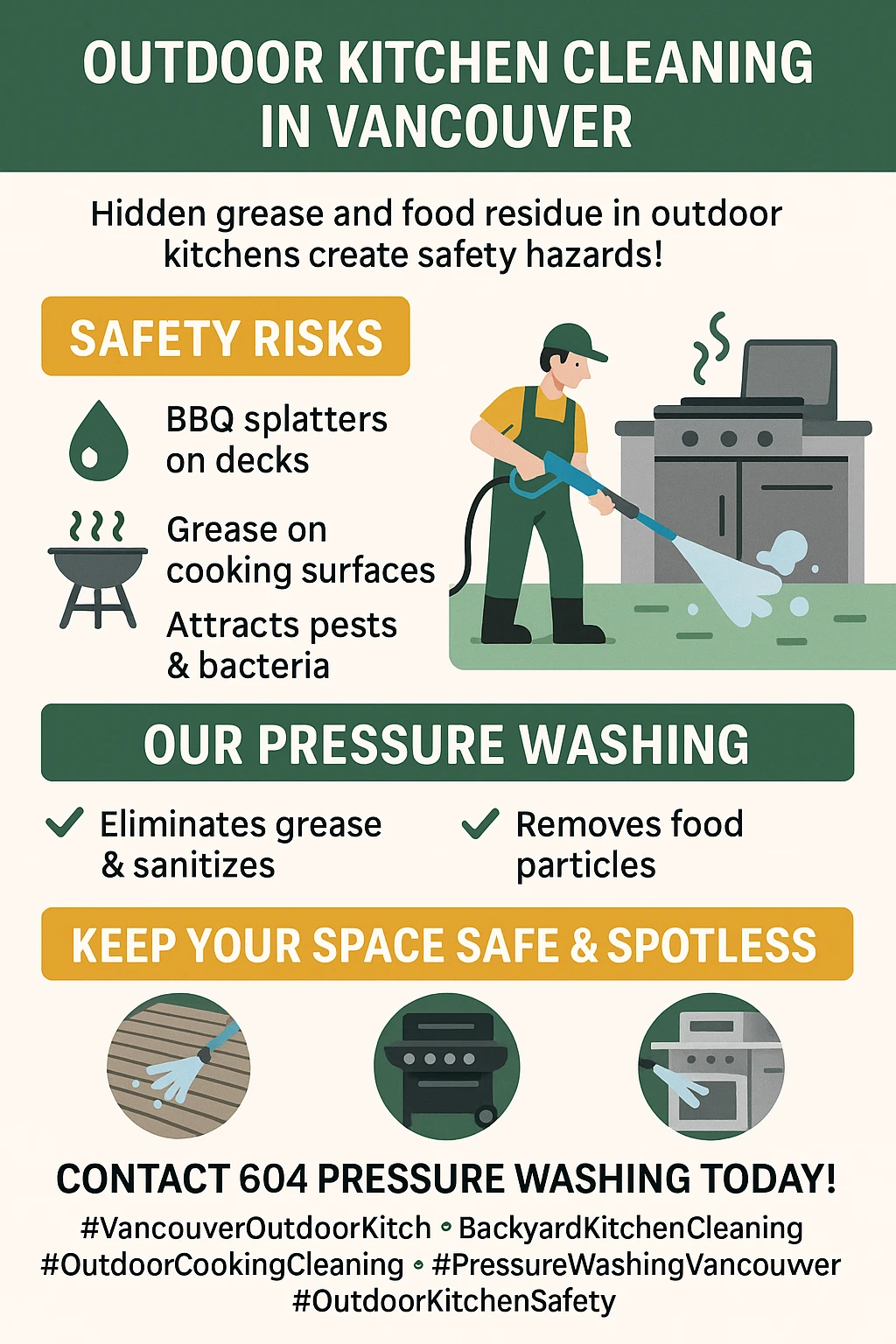
Vancouver’s outdoor living boom has transformed backyards across the Lower Mainland into stunning entertaining spaces, with outdoor kitchens becoming the crown jewel of summer gatherings. From Coal Harbour condos to West Vancouver estates, homeowners are investing tens of thousands of dollars in these sophisticated cooking setups. But here’s what nobody talks about: the combination of Vancouver’s notoriously damp coastal climate and year-round outdoor cooking creates the perfect storm for grease accumulation, bacterial growth, and serious food safety hazards that standard cleaning methods simply cannot address.
Unlike homeowners in drier climates who winterize their outdoor kitchens for months at a time, Vancouver’s mild weather means continuous use and continuous contamination buildup. That beautiful stone countertop where you prepped last weekend’s salmon? It’s likely harboring bacteria that could make your guests seriously ill. The stainless steel grill that looks pristine on the outside? Grease buildup inside could ignite at any moment. And that persistent musty smell you’ve been ignoring? It’s probably mold thriving in the constant moisture that defines our coastal climate.
The solution isn’t another bottle of all-purpose cleaner or a weekend warrior session with your garden hose. Professional pressure washing and outdoor kitchen sanitization services offer Vancouver homeowners a critical line of defense against these hidden dangers while protecting their substantial investment in outdoor living spaces.
[IMAGE PLACEHOLDER FOR IMAGE1]
Key Outtakes:
- Vancouver’s wet climate accelerates mold, mildew, and bacterial growth on outdoor cooking surfaces, creating unique food safety risks not found in drier regions
- Grease buildup in outdoor kitchens poses serious fire hazards, with accumulated grease igniting at temperatures as low as 375°F while normal cooking reaches 400-450°F
- Professional pressure washing at proper temperatures kills bacteria and viruses while removing biofilm that harbors dangerous pathogens – something DIY cleaning cannot achieve
- Improper cleaning techniques can actually spread contamination rather than eliminate it, making professional outdoor kitchen sanitization essential for safe entertaining
- Regular maintenance through pressure washing services protects your investment while ensuring compliance with food safety standards year-round
The Hidden Dangers Lurking in Vancouver’s Outdoor Kitchens
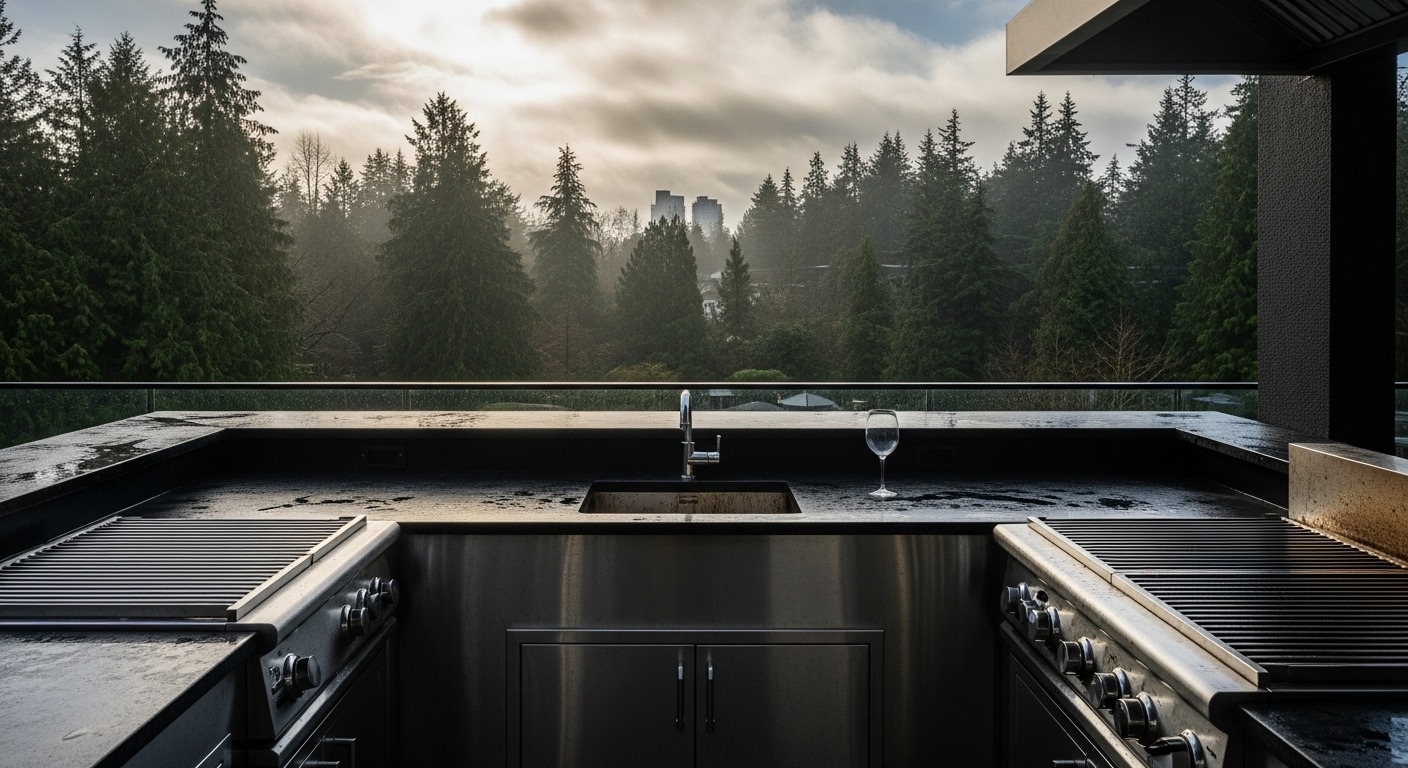
Most Vancouver homeowners focus on the aesthetic appeal of their outdoor kitchens, but beneath those Instagram-worthy surfaces lies a microscopic battlefield where dangerous bacteria wage war against your family’s health. The reality is that outdoor cooking environments face contamination challenges that indoor kitchens never encounter, and Vancouver’s unique climate makes these problems significantly worse than in other regions.
Vancouver’s climate creates the perfect conditions for bacterial growth in ways that most homeowners don’t understand. Kitchen surfaces naturally host remarkably diverse bacterial communities that differ both between kitchens and across surface types, with moisture being the primary factor influencing bacterial growth rates. While indoor kitchens maintain relatively consistent humidity levels, outdoor kitchens in Vancouver are subjected to an average of 161 days of rain per year combined with mild temperatures that create ideal conditions for biofilm formation on cooking surfaces. Unlike drier climates where bacteria might die off between uses due to dehydration, Vancouver’s outdoor kitchens remain damp even during supposed “dry” periods, allowing dangerous microorganisms to thrive continuously rather than experiencing natural die-off cycles.
The grease accumulation problem in Vancouver outdoor kitchens represents a ticking time bomb that most homeowners completely underestimate. A mere 1/8 inch of grease buildup can ignite at temperatures as low as 375°F, while cooking oils typically reach 400-450°F during normal cooking operations. The National Fire Protection Association reports that failure to clean kitchen exhaust systems is a leading factor in home cooking fires, and this risk multiplies in outdoor environments where wind can spread flames rapidly. Outdoor kitchens used year-round in Vancouver’s mild climate accumulate grease faster than seasonal-use kitchens in colder regions because there’s no natural winter “break” that allows for deep cleaning and maintenance.
What makes Vancouver’s situation particularly dangerous is the wildlife factor that other urban areas don’t face. Accumulated grease creates an attractive food source for pests, and Vancouver’s aggressive raccoon, rat, and carpenter ant populations view outdoor kitchen grease as an all-you-can-eat buffet. These pests don’t just consume the grease – they contaminate surfaces with their droppings, spread bacteria throughout the cooking area, and can cause structural damage to cabinetry and appliances while accessing food sources.
Cross-contamination risks multiply exponentially in outdoor cooking environments. When juices from raw meats or bacteria from unclean items touch cooked or ready-to-eat foods, cross-contamination can occur, spreading harmful bacteria like salmonella and E. coli. Outdoor cooking surfaces are constantly exposed to environmental contaminants that indoor kitchens never encounter – bird droppings from the seagulls that frequent Vancouver’s coastal areas, pollen that creates sticky surfaces perfect for bacterial adhesion, and airborne bacteria carried in from nearby traffic and industrial activities. Even that refreshing ocean breeze carries salt particles that create microscopic surface abrasions where bacteria can hide and multiply.
Why Standard Cleaning Methods Fail for Outdoor Kitchens
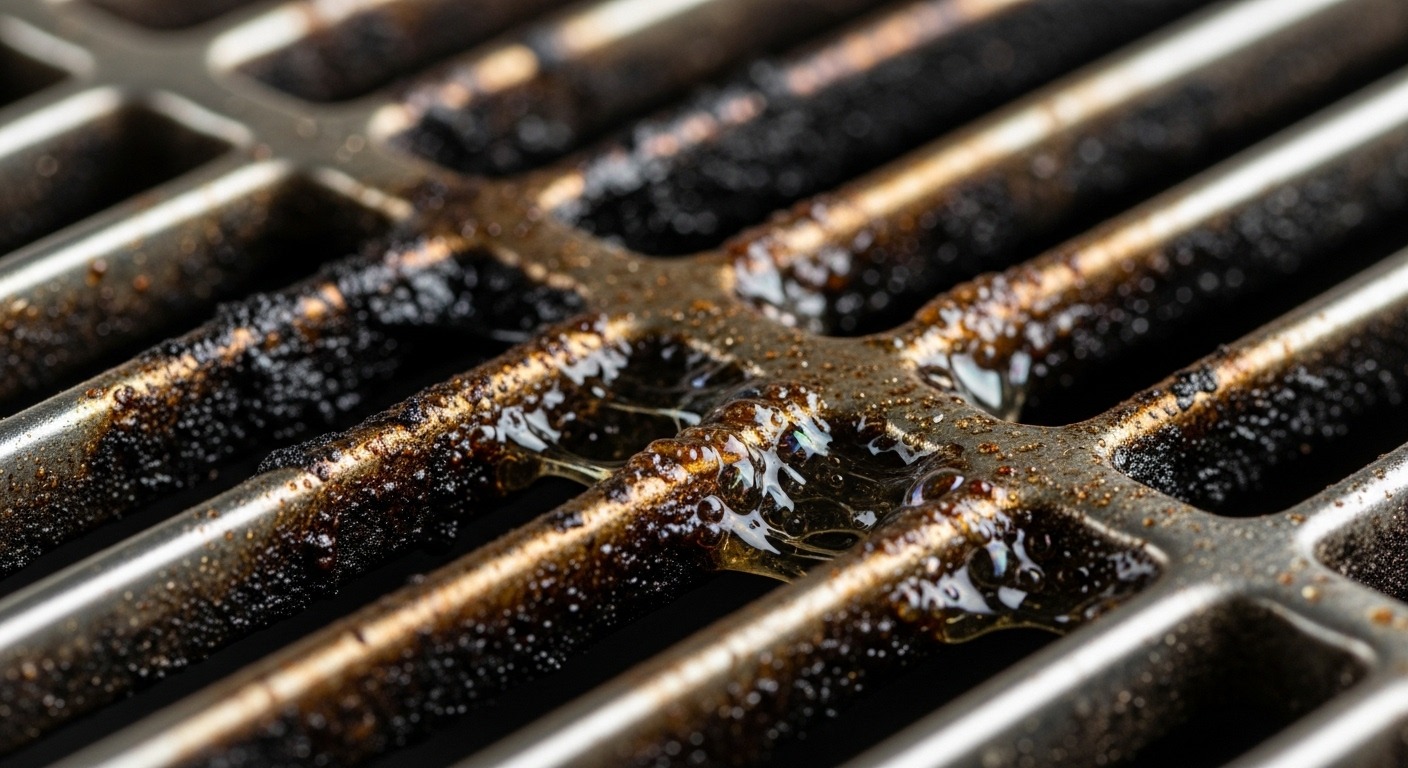
The biggest mistake Vancouver homeowners make is assuming that the same cleaning methods they use indoors will work for their outdoor kitchen. This misconception leads to a false sense of security while dangerous contamination continues to build up beneath seemingly clean surfaces. The fundamental problem is that most cleaning approaches focus on removing visible dirt and grease without addressing the invisible biofilm layer that protects harmful bacteria and viruses.
Biofilm represents the single greatest challenge in outdoor kitchen sanitization, and it’s something that standard cleaning methods cannot effectively combat. If you do not remove the biofilm, then you simply cannot effectively reduce the numbers of bacteria and viruses occurring on a surface according to the Centers for Disease Control (CDC) and World Health Organization (WHO). This protective layer acts like an invisible shield, allowing microorganisms to resist standard cleaning agents and survive on surfaces even after they appear clean. Biofilm formation accelerates in moist environments, making Vancouver’s outdoor kitchens particularly susceptible to this problem.
The pressure differential between garden hoses and professional equipment reveals why DIY cleaning fails so dramatically. Pressure washers produce pressures from 750 to 30,000 pound-force per square inch (psi), compared to the average force from a home water faucet at about 40 to 60 psi. This massive difference in cleaning power explains why homeowners can scrub for hours with minimal results while professional services achieve dramatic improvements in minutes. The significantly higher pressure is necessary to dislodge hardened grease that has bonded to surfaces and remove biofilm from porous materials like natural stone and concrete.
Most homeowners use cleaning products that remove visible dirt but do nothing to kill pathogens, leaving outdoor kitchens contaminated despite appearing clean. The CDC and WHO recommend using a 0.5% solution of sodium hypochlorite (bleach) and water to sanitize surfaces, with bacteria and viruses not tolerating temperatures above 140 degrees Fahrenheit. Standard all-purpose cleaners, which often lack these properties, are ineffective against the resilient pathogens found in outdoor environments. Professional pressure washing services use specialized, food-safe detergents combined with high-temperature water to both clean and sanitize surfaces, killing dangerous microorganisms that DIY methods leave behind. This process doesn’t just clean your outdoor kitchen; it creates a certifiably safe environment for food preparation and entertaining.
FAQs About Outdoor Kitchen Cleaning and Food Safety
Q: How often should I have my Vancouver outdoor kitchen professionally cleaned?
A: Given Vancouver’s damp climate, we recommend a deep cleaning and sanitization at least twice a year – once in the spring to prepare for peak grilling season and once in the fall to remove accumulated grease before winter. For homeowners who entertain frequently, a quarterly service may be more appropriate to maintain optimal food safety.
Q: Is pressure washing safe for my high-end stone countertops and stainless steel appliances?
A: Yes, when performed by trained professionals. We use adjustable pressure settings and specialized nozzles to safely clean different surfaces. For delicate materials like natural stone, we use a lower pressure “soft wash” technique with food-safe cleaning agents to remove biofilm and stains without causing any damage.
Q: Can’t I just use a store-bought degreaser and a scrub brush?
A: While this might remove some surface-level grease, it won’t eliminate the underlying biofilm where bacteria thrive, nor will it clear hardened grease from inside your grill and exhaust system. Improper scrubbing can also create micro-scratches on stainless steel, providing new hiding places for bacteria. Professional services address the entire system for a truly sanitary result.
Q: What’s the biggest food safety risk you see in Vancouver outdoor kitchens?
A: Cross-contamination from surfaces that appear clean but are harboring bacteria. Homeowners will wipe down a counter, but the persistent moisture in our climate means biofilm has likely formed. They then place ready-to-eat food on that surface, unknowingly transferring pathogens. This is why professional-grade, high-temperature sanitization is so critical in our region.
Wrapping Up: Protecting Your Health and Your Investment
Your Vancouver outdoor kitchen is more than just a cooking area – it’s a significant investment in your home’s value and your family’s lifestyle. But in a climate that actively promotes bacterial growth and grease buildup, treating its maintenance like an indoor kitchen is a recipe for disaster. The hidden risks of foodborne illness, fire hazards, and pest infestations are simply too great to ignore.
Professional pressure washing and sanitization are not a luxury; they are an essential service for any Vancouver homeowner with an outdoor kitchen. By removing the invisible biofilm, eliminating dangerous grease buildup, and creating a truly sanitary cooking environment, you protect not only your substantial financial investment but also the health and safety of your family and friends. Don’t let a hidden hazard ruin your next backyard gathering. Ensure your stunning outdoor kitchen is as safe as it is beautiful.
