
Why Vancouver’s Underground Parking Garages Are Becoming Toxic Air Traps (And How Pressure Washing Your Garage Surfaces Creates Healthier Air for Your Family)
Concerned about the air quality in Vancouver’s underground parking garages and how it might be affecting your family’s health? You’re absolutely right to be worried – these enclosed spaces are becoming serious toxic air traps that impact not just workers but residents living in buildings above them, and the solution involves more than just better ventilation.
Picture this: you’re grabbing your car from the underground parking garage in your downtown Vancouver condo building, and you notice that musty smell mixed with exhaust fumes that seems to get worse every month. Maybe you’ve started getting headaches after spending time down there, or you’ve noticed your kids coughing more since you moved into a building with underground parking. What you’re experiencing isn’t just “garage smell” – it’s a complex cocktail of toxic pollutants that have been building up on surfaces for years, creating an environment that’s genuinely hazardous to your health.
Here’s what most people don’t realize about Vancouver’s underground parking situation: our city’s unique combination of high humidity, temperature fluctuations, and urban density creates the perfect storm for air quality disasters in these spaces. The moisture from our coastal climate doesn’t just make these garages feel damp – it actively helps transport harmful chemicals and promotes mold growth that releases spores into the air you breathe. When you combine this with decades of accumulated oil stains, brake dust, and chemical residues that have never been properly cleaned from surfaces, you get secondary pollution sources that keep contaminating the air even when no cars are running.
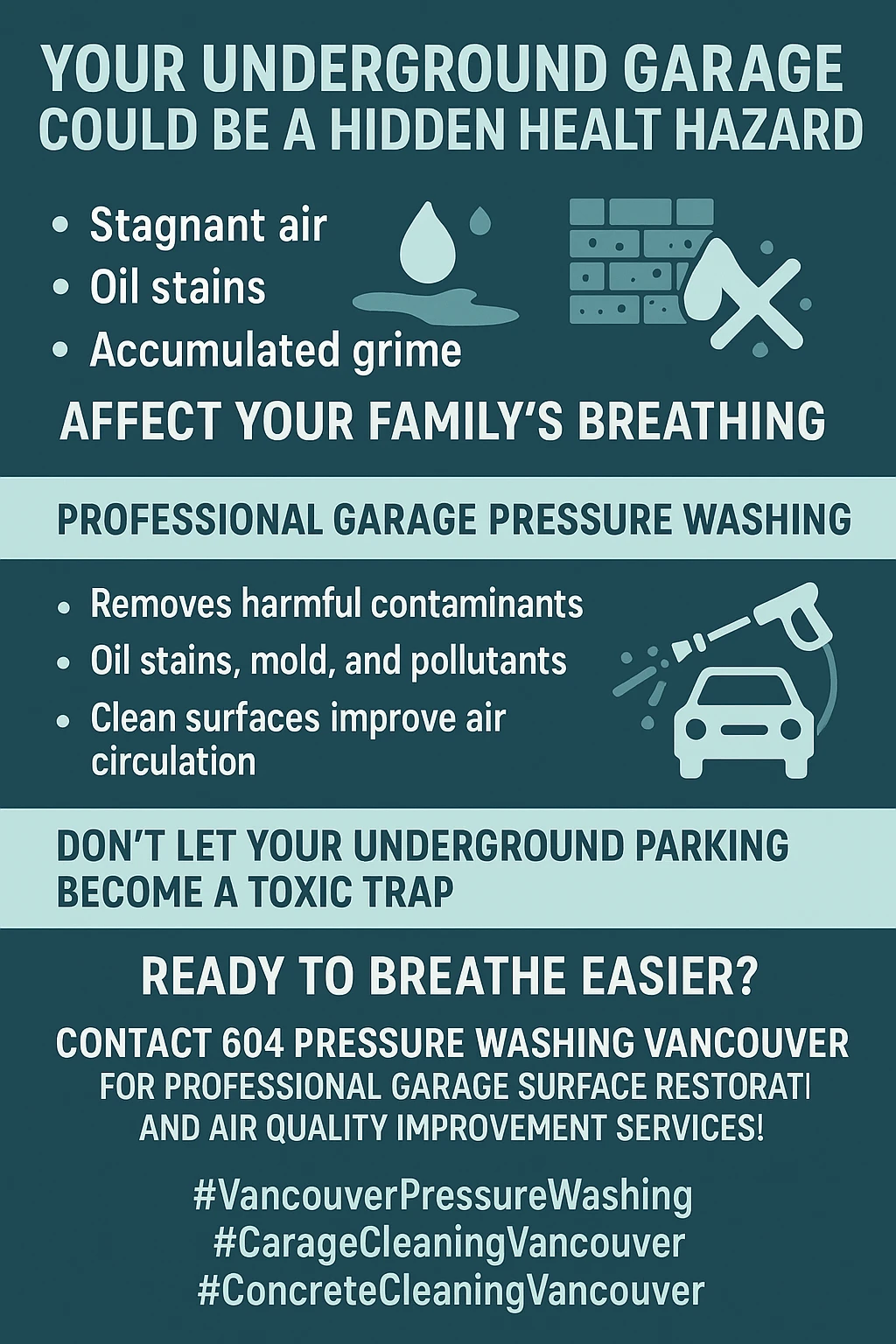
But here’s the game-changing part that nobody talks about: professional pressure washing of garage surfaces can reduce airborne pollutants by up to 60%, making these spaces dramatically safer for your family. We’re not talking about a quick hose-down – we’re talking about hot water pressure washing that removes the embedded contaminants that have been off-gassing toxic chemicals into the air for years.
Key Takeaways:
- Vancouver’s underground parking garages concentrate multiple toxic pollutants including carbon monoxide, benzene, nitrogen dioxide, and mold spores that pose serious health risks to workers and building residents
- Surface contamination from oil stains, chemical residues, and biological growth creates secondary pollution sources that continuously degrade air quality even when vehicles aren’t running
- Professional hot water pressure washing removes embedded contaminants and can reduce particulate matter by up to 60% while eliminating mold spores by 70-85%
- Vancouver’s coastal climate creates unique moisture conditions that make regular surface cleaning essential for maintaining healthy air quality in underground spaces
- The “stack effect” in multi-story buildings means contaminated garage air naturally flows upward into residential units, affecting families throughout the building
The Hidden Health Crisis in Vancouver’s Underground Parking Spaces
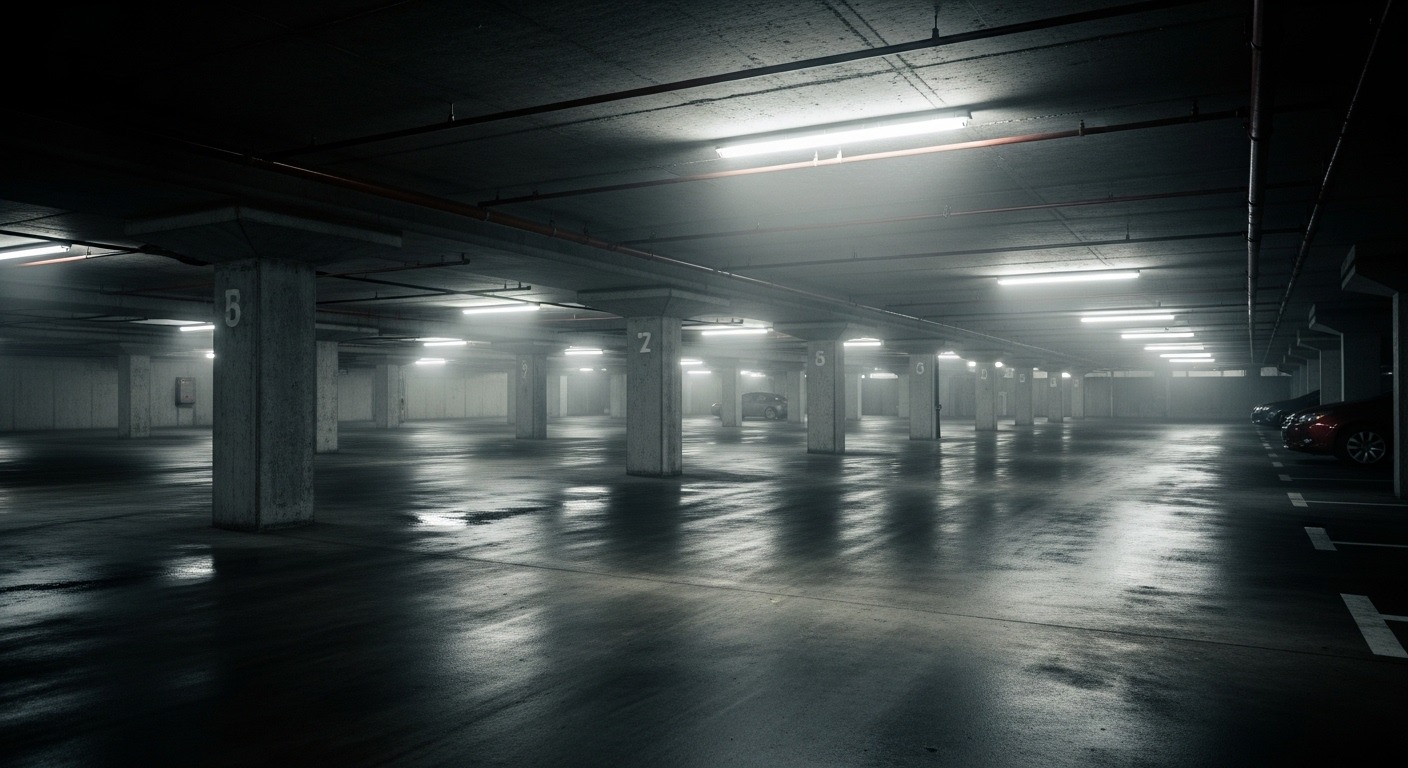
Vancouver’s underground parking garages have evolved into something far more dangerous than most people realize. Unlike surface parking lots where wind and weather naturally disperse pollutants, these enclosed spaces trap and concentrate toxic chemicals at levels that regularly exceed safe exposure limits. The problem starts with the obvious culprits – carbon monoxide and benzene from vehicle exhaust – but extends into a complex web of contamination that includes particulate matter from degraded concrete, volatile organic compounds off-gassing from accumulated oil stains, and biological contaminants thriving in our perpetually moist climate.
What makes Vancouver’s situation particularly alarming is the way our geographic and climatic conditions amplify these problems. Research on parking garage air quality shows that high humidity increases the transport and concentration of harmful gases, while temperature inversions common in the Lower Mainland can trap pollutants in the air basin. When you combine this with the fact that many of our parking garages were built 30-50 years ago with inadequate ventilation systems, you get spaces where carbon monoxide can spike to 658 ppm within 12 minutes of vehicle activity – nearly 20 times the safe exposure limit.
The health impacts extend far beyond the occasional headache. Workers in these facilities face chronic exposure to benzene, a known carcinogen that increases leukemia risk even at low concentrations. But the problem doesn’t stop with parking attendants and maintenance staff. In Vancouver’s dense urban core, most underground parking sits directly beneath residential and commercial buildings, creating a phenomenon called the “stack effect” where contaminated garage air is naturally drawn upward into living spaces through small openings, gaps in construction, and shared ventilation systems.
Here’s the scary part: studies of residential buildings with underground or attached garages found that garage air infiltration can account for 5-85% of outdoor air entering homes, and in four of twelve homes studied, carbon monoxide exposure reached 60% or more of EPA safety limits. For Vancouver families living in downtown towers with underground parking, this means you’re potentially breathing parking garage air pollution inside your own home, especially during winter months when heating systems create stronger pressure differentials that actively pull garage air upward.
Surface Contamination: The Overlooked Source of Ongoing Air Pollution
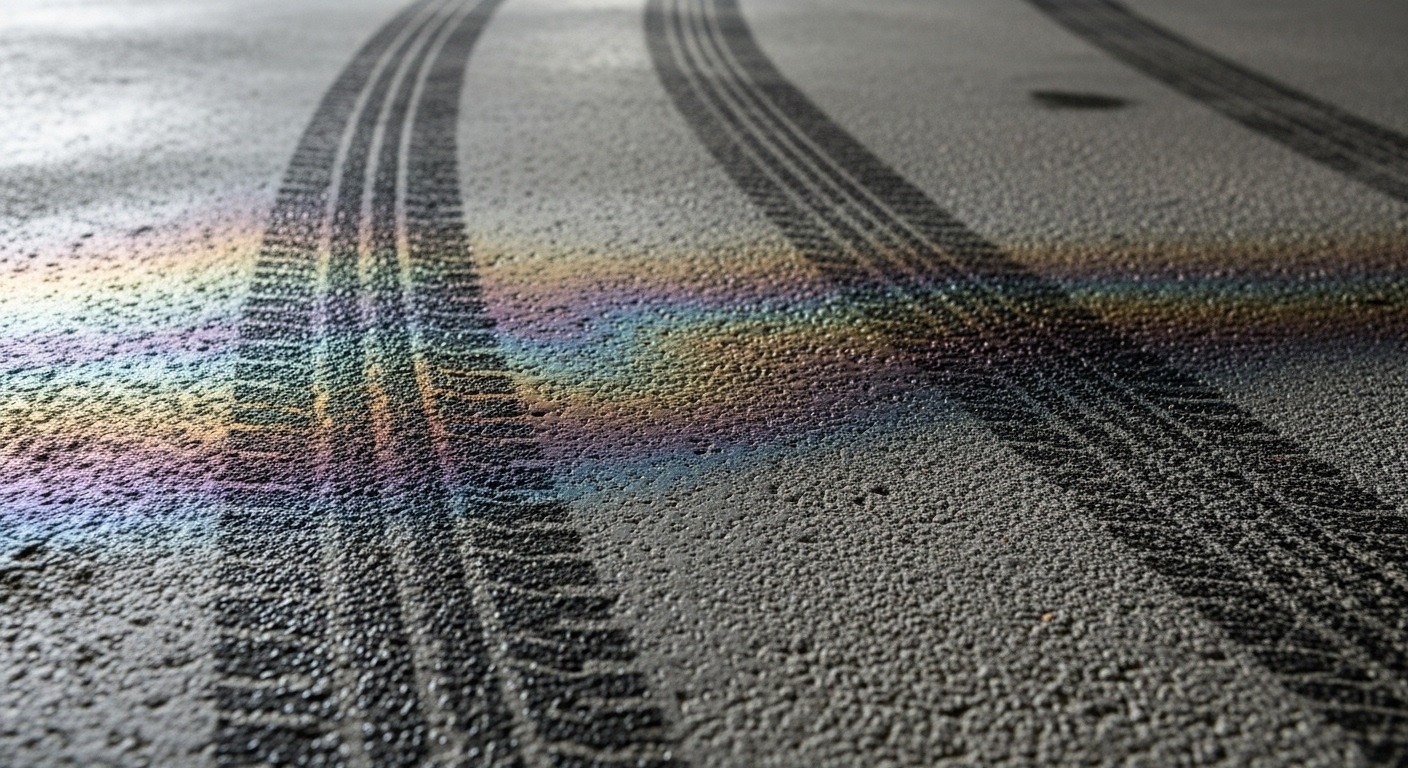
Most discussions about parking garage air quality focus on active emissions from running vehicles, but there’s a massive secondary pollution source that operates 24/7: contaminated surfaces. After decades of use, the floors, walls, and structural elements in Vancouver’s underground parkades have become repositories of chemical contamination that continuously degrade air quality even when the garage sits empty overnight.
Oil stains represent one of the most significant surface contamination issues. These aren’t just aesthetic problems – oil contains hydrocarbons that slowly volatilize into the air, contributing to indoor VOC concentrations that can cause respiratory irritation, headaches, and long-term health effects. Each oil stain acts like a tiny chemical factory, continuously emitting toxic compounds into the breathing zone. When you multiply this by hundreds of accumulated stains across a typical parking facility, the cumulative impact becomes substantial.
The concrete itself becomes part of the problem over time. Vancouver’s combination of high humidity and temperature cycling causes unsealed concrete to absorb moisture, leading to surface degradation that releases dust particles into the air. Research on garage air contamination shows that this particulate matter includes not just concrete dust but also brake wear particles, tire debris, and salt deposits from winter road treatments – all of which become airborne and contribute to respiratory problems.
Perhaps most concerning from a Vancouver perspective is the biological contamination. Our coastal climate creates ideal conditions for mold and mildew growth on garage surfaces: high moisture, limited direct sunlight, and poor air circulation in many areas. Unlike chemical pollutants that can be somewhat managed through ventilation, mold spores are living contaminants that reproduce and spread. They require active removal from surfaces, not just dilution through air changes.
The biofilms that develop on contaminated surfaces create their own microenvironments that support bacterial growth and further surface degradation. When these biofilms dry and break apart, they release additional particulate matter into the air. This creates a self-reinforcing cycle: surface contamination degrades air quality, which deposits more contaminants on surfaces, which creates conditions for biological growth, which further degrades surfaces and air quality.
How Pressure Washing Breaks the Contamination Cycle
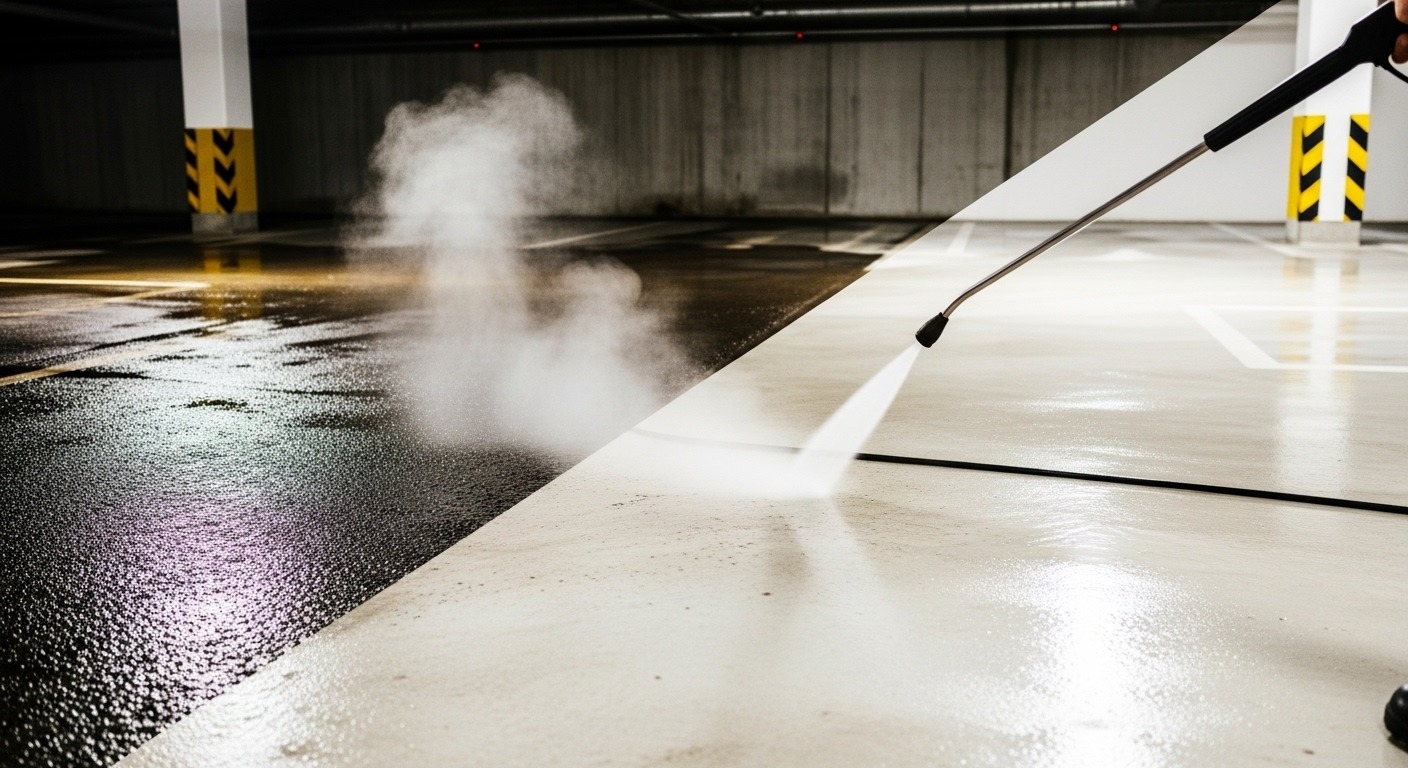
Professional pressure washing represents a direct intervention that breaks the cycle of surface contamination and secondary air pollution in underground parking facilities. The mechanism is both immediate and long-lasting: high-velocity water jets physically remove accumulated contaminants from surfaces while eliminating the substrate that supports ongoing chemical off-gassing and biological growth.
The key to effective pressure washing for air quality improvement lies in using hot water technology. Research on pressure washing effectiveness demonstrates that hot water (180-250°F) is significantly more effective than cold water at removing oil and embedded chemical residues. This is particularly crucial in Vancouver where ambient water temperatures are low year-round, making hot water equipment essential for dissolving and removing the hydrocarbon contamination that contributes to VOC off-gassing.
When it comes to quantifiable air quality benefits, the results are impressive. Studies show that pressure washing combined with appropriate surface treatments can reduce particulate matter concentrations by up to 60% compared to untreated concrete. For mold and biological contamination, pressure washing followed by the application of an appropriate biocide can eliminate 70-85% of mold spores from treated surfaces, preventing them from becoming airborne.
Frequently Asked Questions About Parking Garage Pressure Washing & Air Quality
Q1: Isn’t good ventilation enough to keep parking garage air clean?
While ventilation is critical for managing active emissions from running vehicles, it does not address the secondary pollution from contaminated surfaces. Oil stains, chemical residues, and mold continue to release pollutants into the air 24/7, and ventilation systems simply dilute these contaminants rather than eliminating the source. Pressure washing removes the source, providing a more permanent air quality improvement.
Q2: How often should a Vancouver underground parkade be pressure washed for health reasons?
Given Vancouver’s high humidity and frequent rain, which brings more contaminants into garages, we recommend a deep pressure wash of all surfaces at least once every 12-18 months. High-traffic areas may benefit from spot cleaning every 6 months. This regular maintenance prevents the long-term buildup of the chemical and biological films that degrade air quality.
Q3: Can pressure washing really affect the air quality in my condo unit upstairs?
Absolutely. The “stack effect” is a proven principle in building science. Because warm air rises, a pressure differential is created that pulls air from lower levels (like the parking garage) up into the rest of the building through elevator shafts, stairwells, and small gaps. By cleaning the air at its source in the garage, you significantly reduce the pollutants that get transported into your living space.
Wrapping Up…
The air you breathe in your building’s underground parking garage is not just an inconvenience – it’s a direct pathway for toxic pollutants to enter your home and affect your family’s health. In Vancouver’s unique climate, surface contamination becomes a persistent source of air pollution that ventilation alone cannot solve. By taking proactive steps like scheduling professional hot water pressure washing, you can break the cycle of contamination, eliminate hazardous mold and chemical residues, and create a healthier environment from the ground up. Don’t wait for the problem to get worse; take control of your building’s air quality by addressing the overlooked surfaces beneath your feet.
